
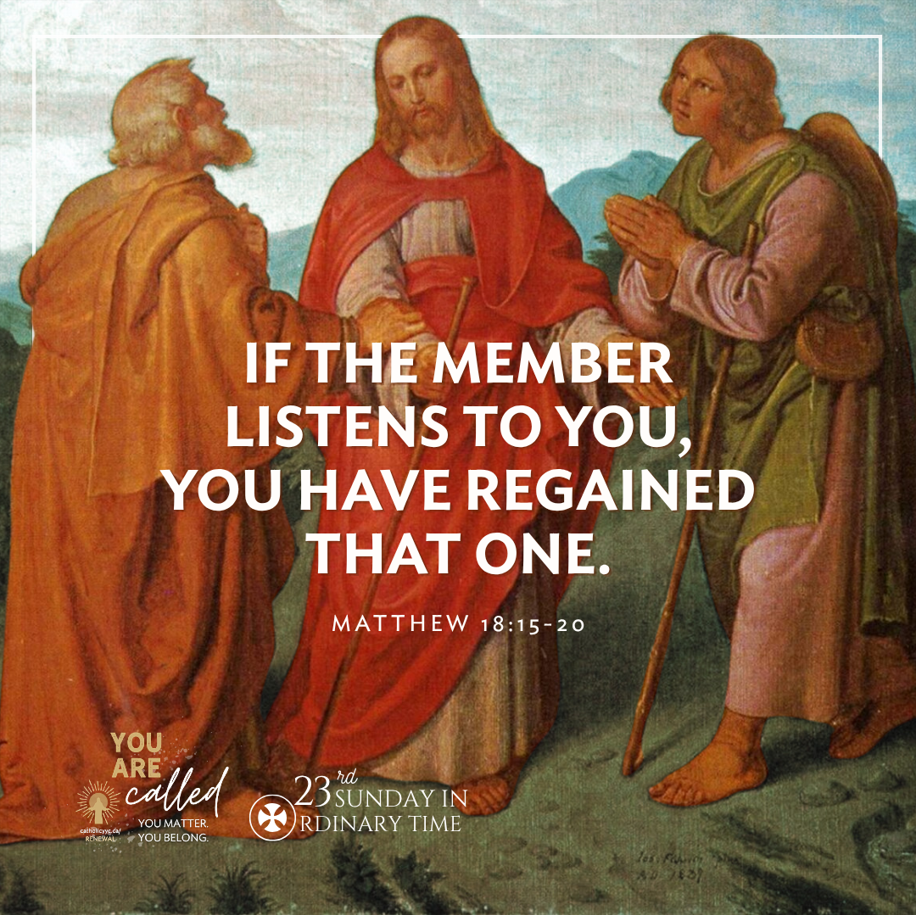
First Reading
Ezekiel 33:7-9
Ezekiel 33:7-9
The Son of Man is appointed as guardian of Israel.
Responsorial Psalm
Psalm 95:1-2,6-9
Responsorial Psalm
Psalm 95:1-2,6-9
Song of praise to God, our salvation.
Second Reading
Romans 13:8-10
Second Reading
Romans 13:8-10
The Law is summarized in the commandment to love your neighbor as yourself.
Gospel Reading
Matthew 18:15-20
Gospel Reading
Matthew 18:15-20
Jesus teaches his disciples how to settle disputes in the Church.
For where two or three are gathered together in my name, there am I in the midst of them.
Sacramental Preparation
Registration is only open for three more weeks -- Sept. 25 at Noon


Ephphatha - Be Opened

On the surface, Jesus' words may seem harsh. After describing a three-step process for reconciling with a brother or sister who has gone astray, He says that if they still refuse to listen, they are to be treated "as a Gentile or a tax collector." It can sound as though Jesus is giving us permission to exclude people or give up on them. But then we remember how Jesus actually treated Gentiles and tax collectors. These were the very people He sought out. He shared meals with them, listened to them, healed them, and went out of His way to welcome them when others kept their distance. As He Himself explained, He came not for the healthy but for the sick. And so what seems at first like a license to ostracize becomes a call to seek out, with even greater patience, prayer, and love, those who seem furthest away.
St. Paul says we owe one another the debt of love. Any correction we offer must be rooted in that love, not in pride, anger, or a desire to judge. After all, this is what we hope others will offer us when we are in the wrong. Loving our neighbour is not easy. Relationships can be messy because people are messy. We all carry wounds, assumptions, and blind spots, and we inevitably bring them into our relationships. The image of Ezekiel the watchman reminds us that we are responsible for one another. Sometimes love means having a difficult conversation we would rather avoid. It means speaking the truth with charity, receiving it with humility, and allowing God to guide us when we wander. The goal is always to help one another draw closer to God.
PONDER IN GOD’S PRESENCE:
Do I approach others with the patience and mercy I hope to receive when I need correction myself?
Do I approach others with the patience and mercy I hope to receive when I need correction myself?
Upcoming Parish Events
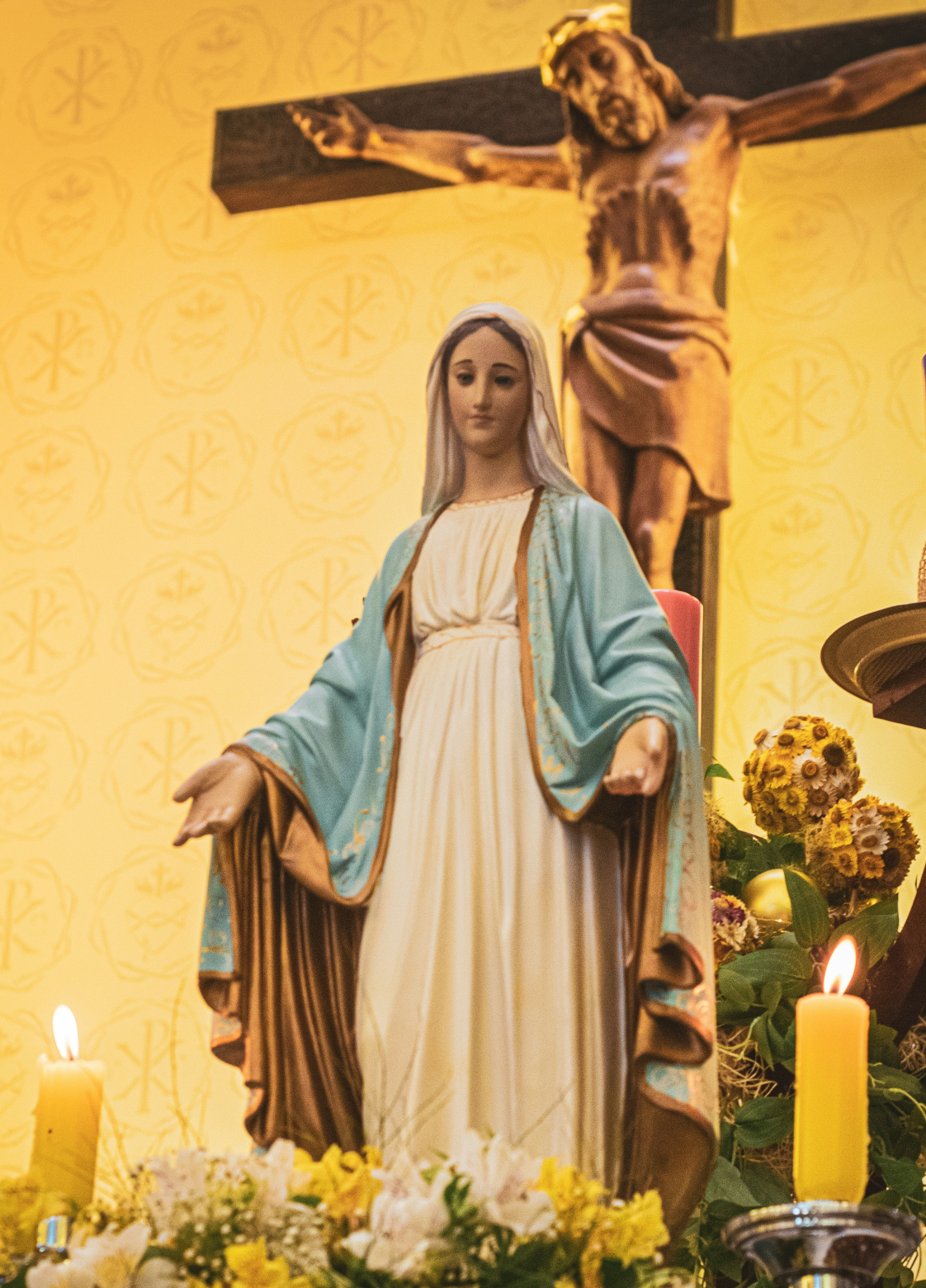
Feast of the Nativity of the Blessed Virgin Mary
Tuesday Sept. 8th
6 pm
St. Patrick's Roman Catholic Church
The Legion of Mary at St. Patrick’s warmly invites all parishioners to join their Annual Praesidium Function. This special evening will celebrate Mother Mary’s birthday and help foster our parish community spirit through a Rosary Procession, the presentation of roses, and Holy Mass. Following the Mass, everyone is welcome to gather in the Hall for a celebratory potluck, so please bring a dish to share.
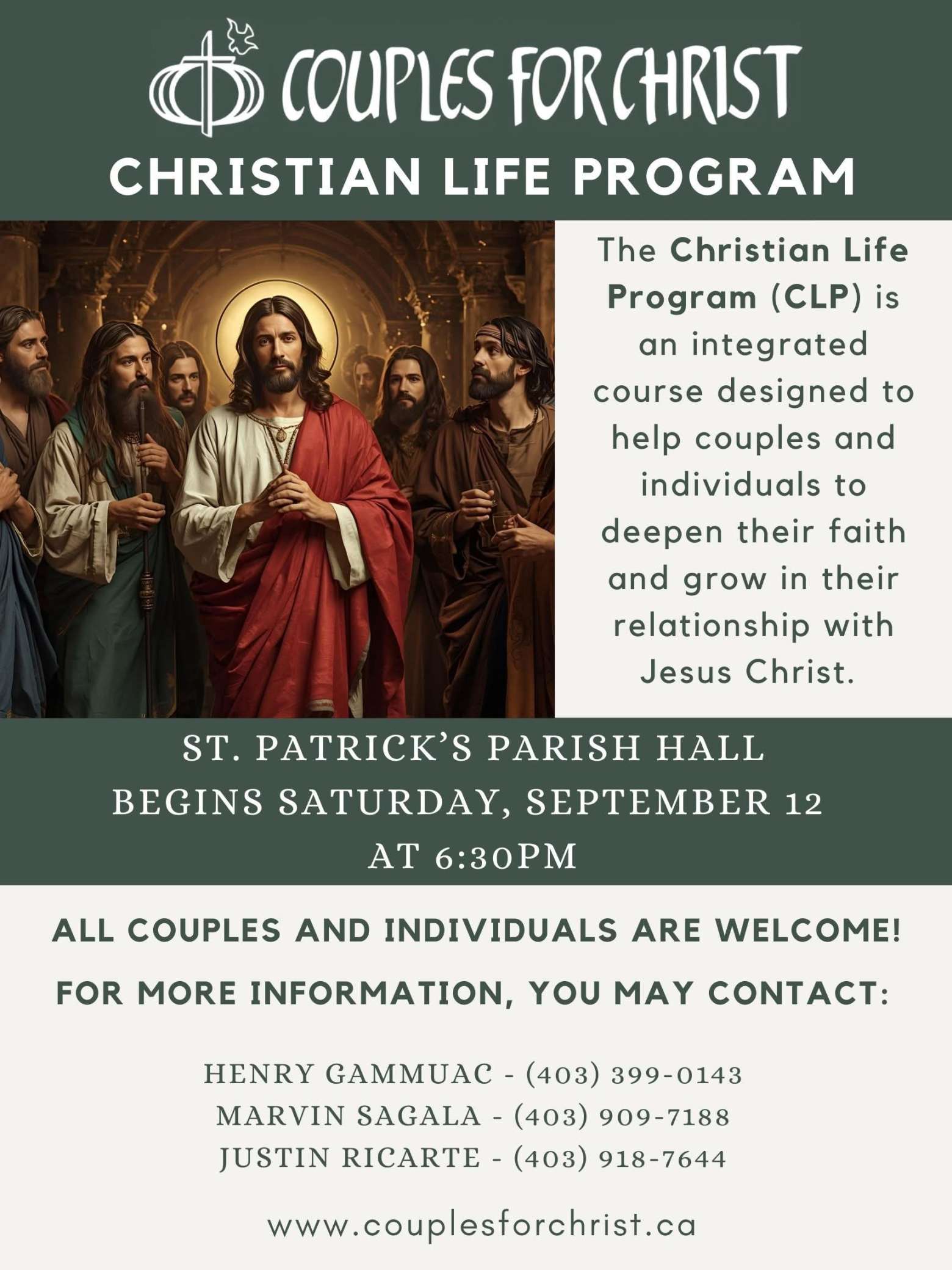
Couples for Christ
Christian Life Program
Saturday Sept. 12th
6:30 pm
St. Patrick's Parish Hall
The Christian Life Program (CLP) is an integrated course designed to help couples and individuals to deepen their faith and grow in their relationship with Jesus Christ.
Children's Corner
Youth Ministry
Grades 6-8 and 9-12

Ablaze Family Ministry for Grades 6-8 and Grades 9-12 is offered Friday evenings from 6:30-9 pm at St. Bonaventure Parish.
For more information please contact Eileen Murdoch at (403) 278-7559 or youthfamily@stbonaventureparish.ca
For more information please contact Eileen Murdoch at (403) 278-7559 or youthfamily@stbonaventureparish.ca
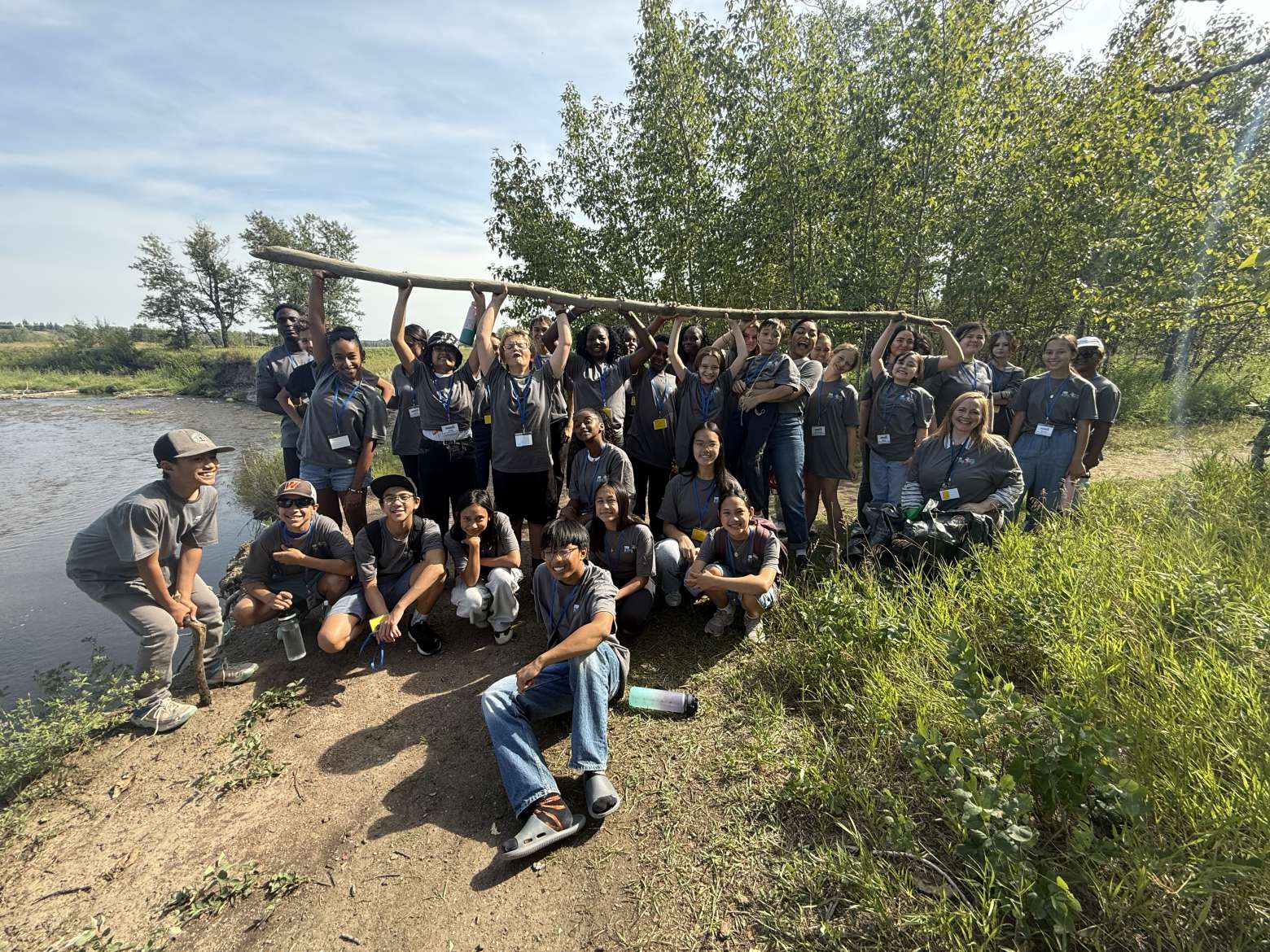
St. Francis Xavier Chaplaincy
For young adults 18-35 in the Diocese of CalgaryUpcoming Events:
Sunday Sept. 6th 4pm, SFXC Mass, St. Mary's Cathedral
Sunday Sept. 6th 5:30pm - SFXC Sunday Social, Cathedral Hall
Tues. Sept. 8th 7pm - Intro to Prayer, Catholic Pastoral Centre (120 17th Ave SW)
Weds. Sept. 9th 5:30pm - St. Joseph Chastity Group, Catholic Pastoral Centre
Weds. Sept. 9th 7pm -SFXC Mass, Adoration, Confession - St. Mary's Cathedral
Weds. Sept. 9th 8:30 pm - Wing Night, St. James Corner Restaurant & Pub
Thurs. Sept. 10th 5pm - Food Bank Sorting - Registration Required

Young Adults Retreat
Three Peaks, Three Hearts
Sept. 25 to 27
Our Lady of the Snows, Canmore, AB
Young adults ages 18–35 are invited to a weekend retreat exploring the Most Sacred Heart of Jesus, Most Immaculate Heart of Mary and Most Chaste Heart of Joseph, with talks from SFXC chaplaincy priests, fellowship and hikes in the beautiful surroundings of Canmore. The retreat costs $50. Participants should arrive by 7 pm on Fri, Sept. 25, and bring a sleeping mat or air mattress, pillow and other personal necessities.
Events in Our Community
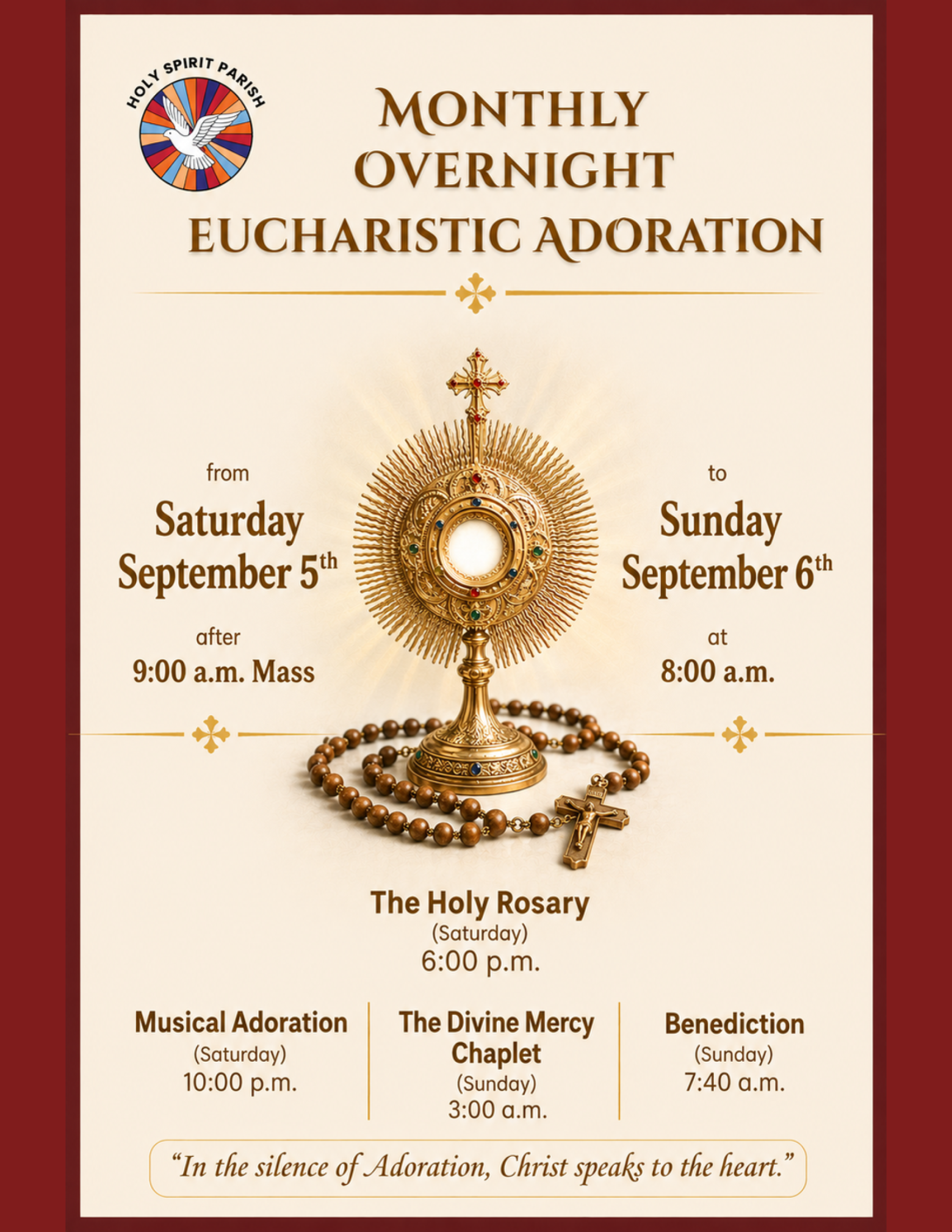
Overnight Adoration
Sept. 5th to 6th
Holy Spirit Parish
10827 24 St SW
10827 24 St SW
Saturday Sept. 5th
Mass, 9 am
Holy Rosary, 6 pm
Musical Adoration, 10 pm
Sunday Sept. 6th
Divine Mercy Chaplet, 3 am
Bendiction, 7:40 am
Mass, 8 am
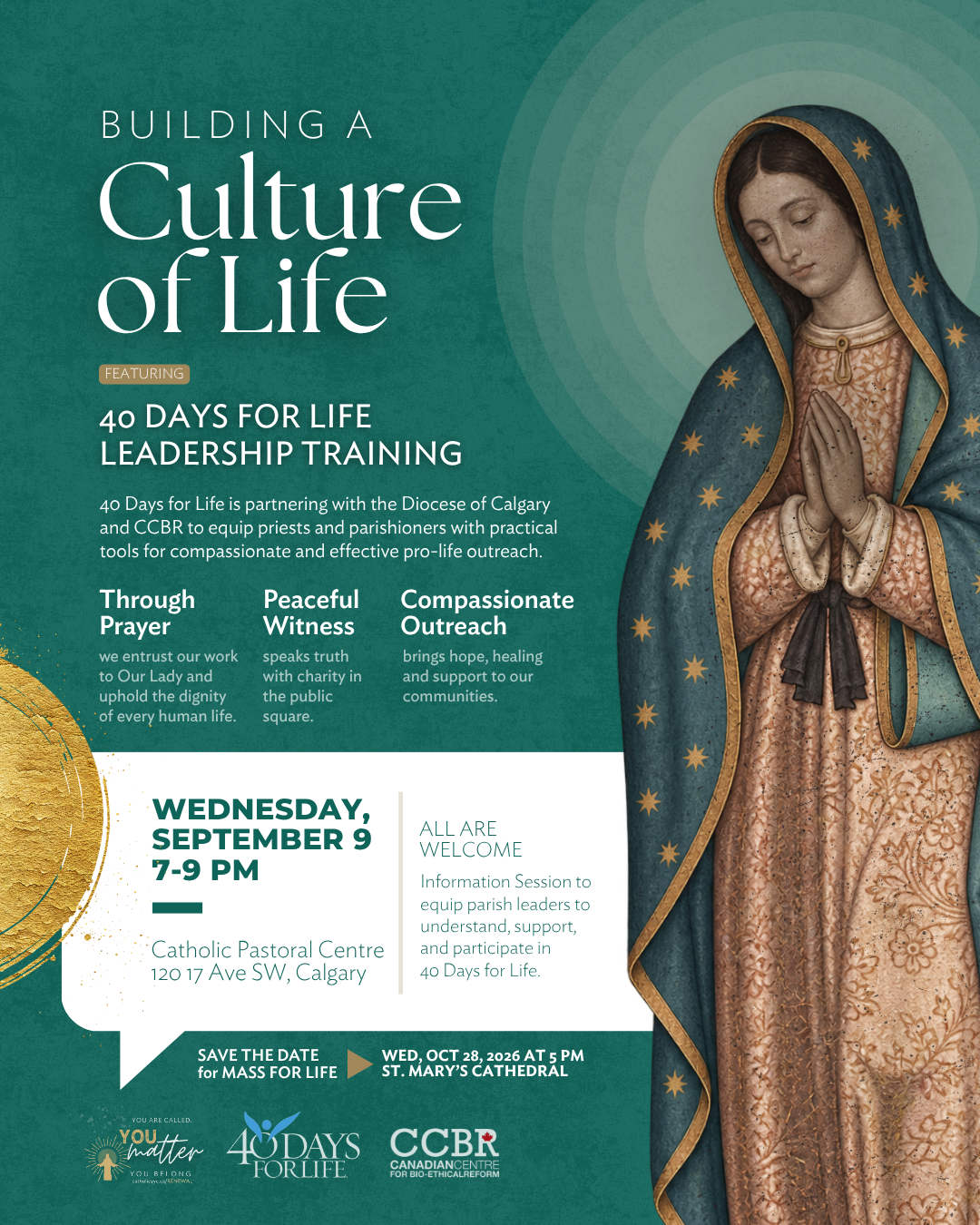
Building a Culture of Life
Wednesday Sept. 9th
7 to 9 pm
Catholic Pastoral Centre
120 17 Ave. SW
Join us for a Building a Culture of Life Diocesan event series. This first session will feature a 40 days for Life Leadership Training to equip parish leaders, priests, and parishioners with practical tools to support and participate in compassionate, effective pro-life outreach.
Come be equipped, encouraged and inspired to help build a culture of life in our communities.
Come be equipped, encouraged and inspired to help build a culture of life in our communities.

Retrouvaille Weekend
for Couples
Sept. 11th to 13th
The Weekend Programme is a full two-day, two-night retreat held at a local off-site venue taking place Sep. 11–13, 2026, beginning Friday with check-in between 6 and 7 p.m., followed by the programme starting promptly at 7:30 p.m. The venue is located in the Calgary area, with the name and location provided after all registration procedures are completed.

Triumph of the Heart
The Passion of Maximilian Kolbe
Sept. 11th, 12th 6:30 pm
Sunday Sept. 13th 4 pm
St. Bonventure Parish,
1600 Acadia Drive SE
The event is free but please register for your tickets in advance. For more info contact Eileen at (403) 278-7556 or youthfamily@stbonaventureparish.ca

Catholic Car Show
Saturday Sept. 12th
10:30 am to 3 pm
St. Bonaventure Parish Parking Lot
Car entry fees are $10
Kids under 16 can enter toy cars or model cars for free.
Funds raised from this event benefit Knights of Columbus charities.
BBQ food will be available for sale. Please bring lawn chairs and blankets.
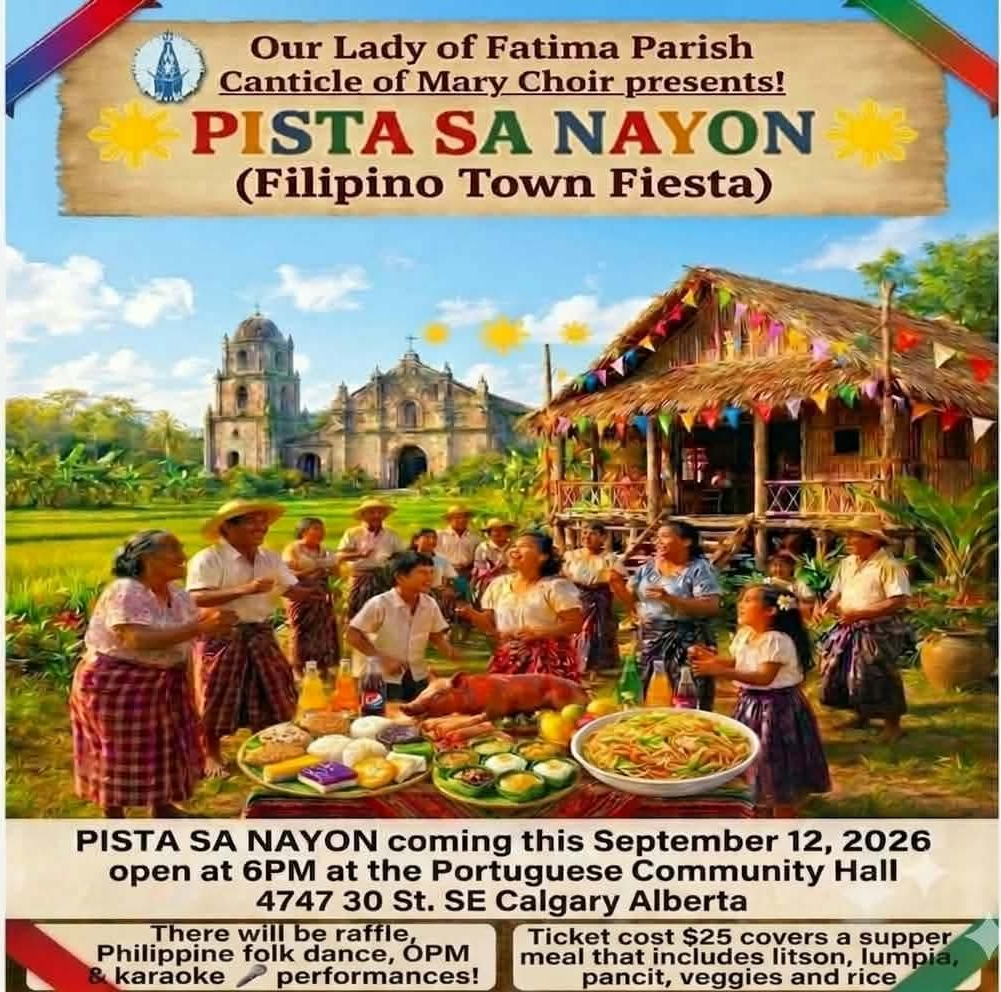
Pista Sa Nayon
Saturday Sept. 12th
6 pm
Portuguese Community Hall
4747 30th St. SE
4747 30th St. SE
Tickets are $25/person
PISTA SA NAYON is a Filipino celebration honoring our patron saint through culture and our Catholic faith.
The supper meal includes lechon, fried lumpia, pancit, veggies, and rice and a chance to win a raffle. Filipino talents will perform live folk dance and Tagalog music, OPM and karaoke performances.
We accept donations and volunteers. For questions or more information contact (403) 273-0621
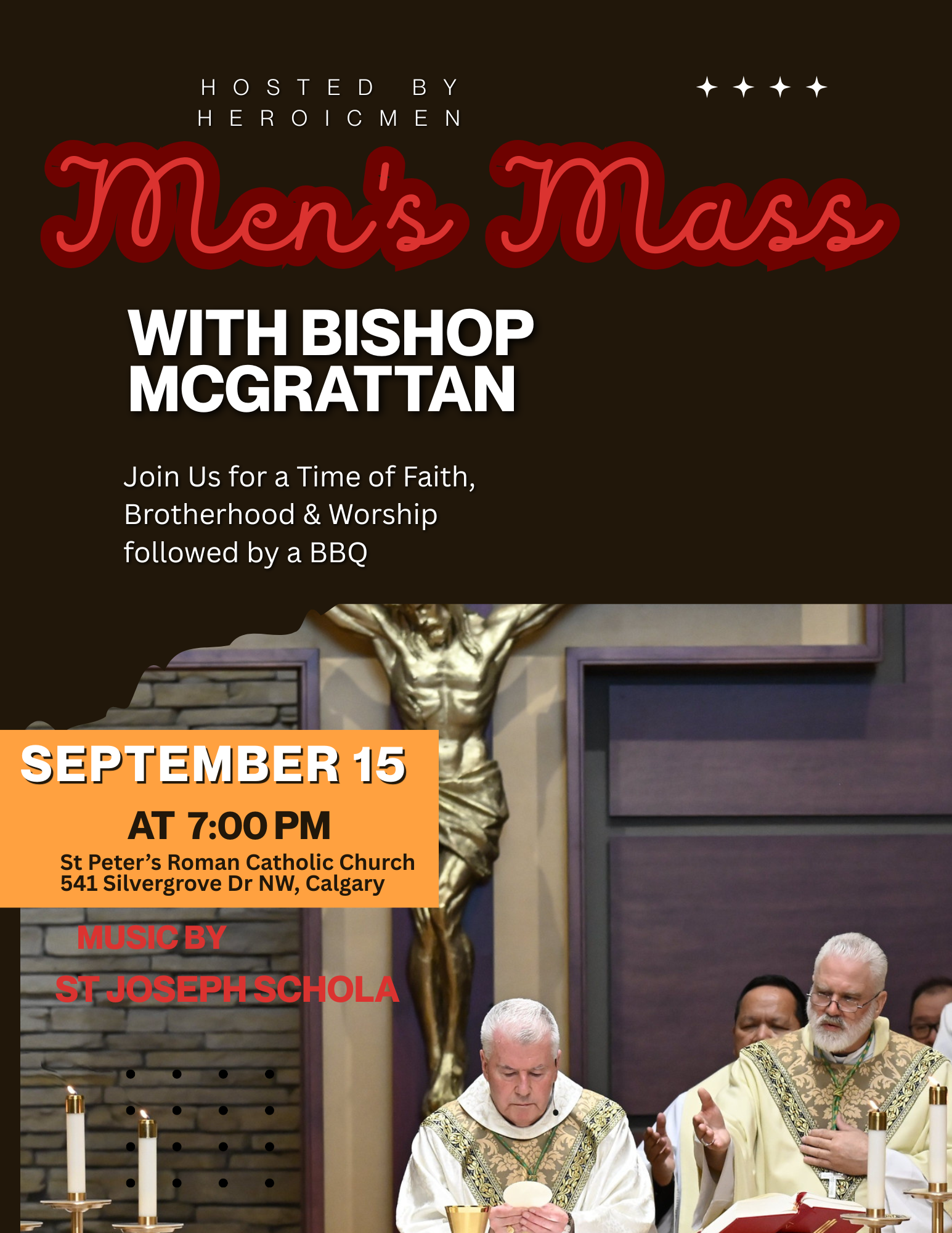
Men's Mass & BBQ
Saturday Sept. 15th
7 pm
St. Peter's Church
541 Silvergrove Dr NW
God’s Squad Canada is hosting an evening of Mass with Bishop McGrattan, and all men of the Diocese are invited to attend. Bring a brother and join us for an evening of faith, fellowship and fraternity. Music will be provided by the St. Joseph’s Choir Schola, followed by a BBQ dinner.
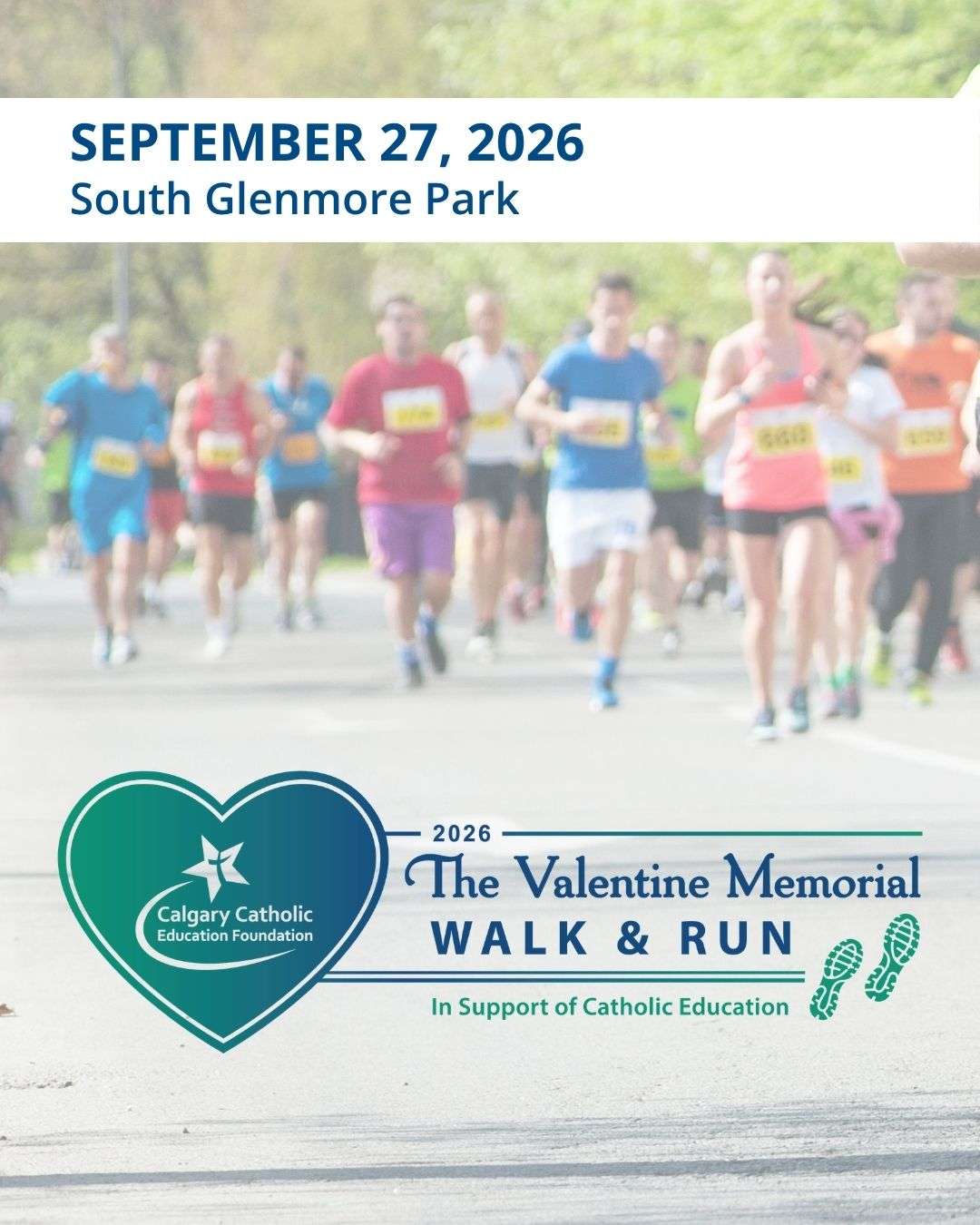
The Valentine Memorial Walk & Run
Saturday Sept. 27th
South Glenmore Park
The Calgary Catholic Education Foundation (CCEF) invites our Catholic community to take part in the inaugural Valentine Memorial Walk/Run.
Walk, run or fundraise in support of Catholic education and direct your fundraising to the Calgary Catholic school of your choice. Every step helps strengthen opportunities for students across our Catholic school community.
Walk, run or fundraise in support of Catholic education and direct your fundraising to the Calgary Catholic school of your choice. Every step helps strengthen opportunities for students across our Catholic school community.
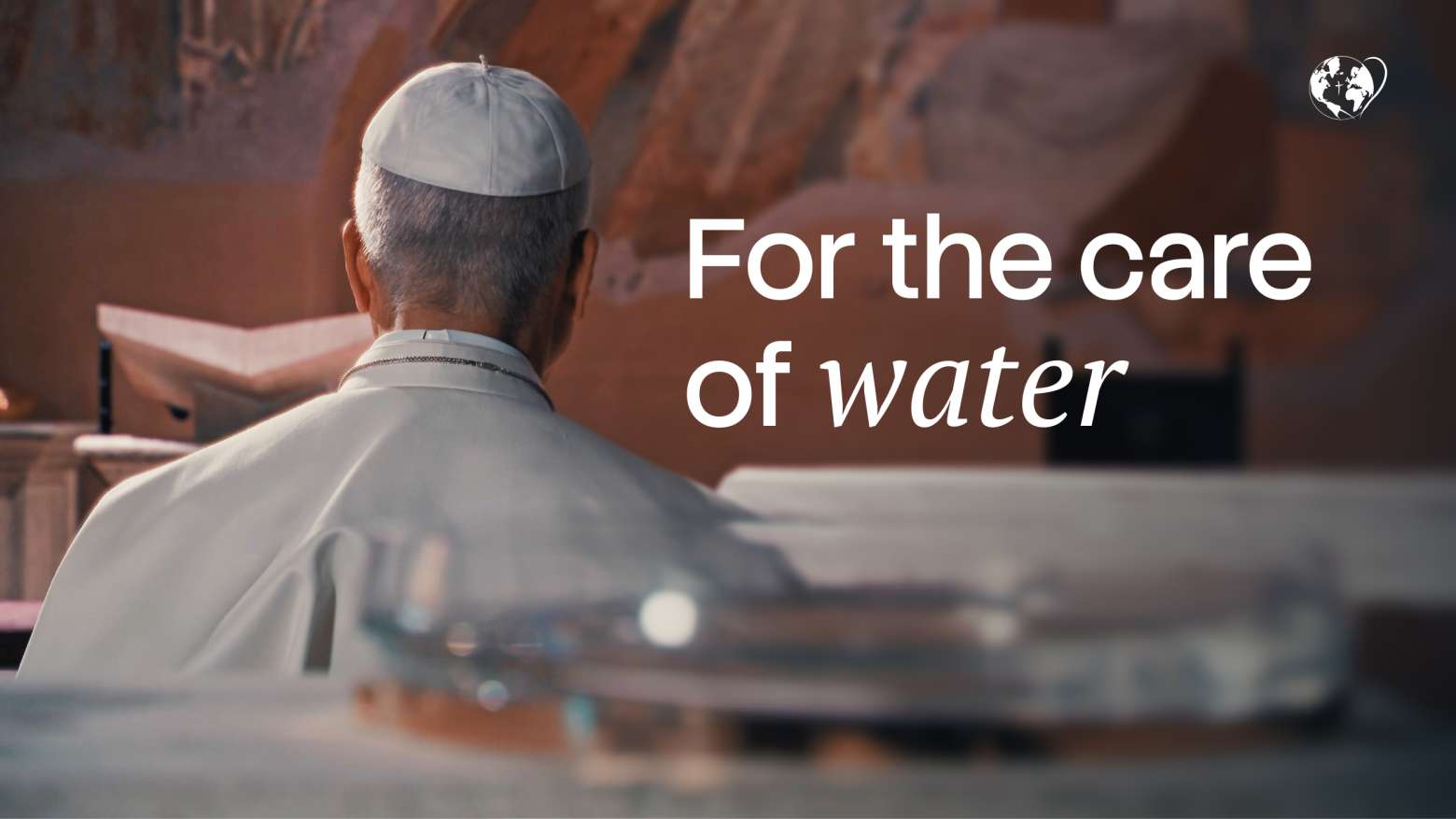
In the name of the Father, and of the Son, and of the Holy Spirit. Amen.
Lord of Life, You have given us the gift of water, source of fruitfulness, freshness, and hope.
It quenches thirst, nourishes the earth, and heals wounds.
We thank You, because it is also a symbol of your grace and love that renews us through Baptism. Today we ask You to teach us to safeguard it with gratitude, justice, and responsibility.
Forgive us for turning it into a commodity, forgetting that it is a universal gift, a right without borders, meant for all your children. We see with pain so many brothers and sisters
who lack clean water, who walk for miles to find it, who become ill due to its scarcity.
May your Spirit make us pilgrims of the essential, able to live with simplicity,
denouncing waste and pollution,
defending the right of every brother and sister to drink without fear and without inequality.
May our care for water be a sign of love for the Creator and a commitment to the lives of the poor, educating new generations to value and protect the Earth’s resources.
Amen.
Diocese of Calgary Updates

Mass Times
Weekend Masses
Saturday 5 pm
Sunday 9 am, 11am, 1 pm, 4pm
Saturday 5 pm
Sunday 9 am, 11am, 1 pm, 4pm
Weekday Masses
Tuesday to Saturday 9 am
Tuesday to Saturday 9 am
Confession
Friday Noon to 1 pm
Saturday 3:30 pm to 4:50 pm
Or by appointment
Rosary Devotions
Sunday 8:15 am
Tuesday to Saturday 8:20 am
Adoration
Fridays 9:30 am to Noon
Support St. Vincent De Paul

St. Vincent De Paul Collections are the third weekend of each month. Please bring your offering which will be collected at the end of Mass.
Visit their website at:
Donations can be made via e-transfer to: ssvpdonate@stpatrickcalgary.com
Contact Us
Office phone: (403) 254-6878
Sacraments: sacraments@stpatrickcalgary.com
Diocese website: www.catholicyyc.com
All bulletin submissions must be received by Tuesday at Noon
Please send it to communications@stpatrickcalgary.com
St. Patrick's Roman Catholic Church
1414 Shawnessy Blvd. SW
Calgary, AB T2Y 2L7
Office Hours:
Monday: Closed
Tuesday-Friday: 9:30 am to 12:30 pm