First Reading: Exodus 22.21-27
Responsorial Psalm: Ps 18.1-2, 3+6b, 46+50ab (R. 1)
R: I love you, O Lord, my strength.
Second Reading: 1 Thessalonians 1.5c-10
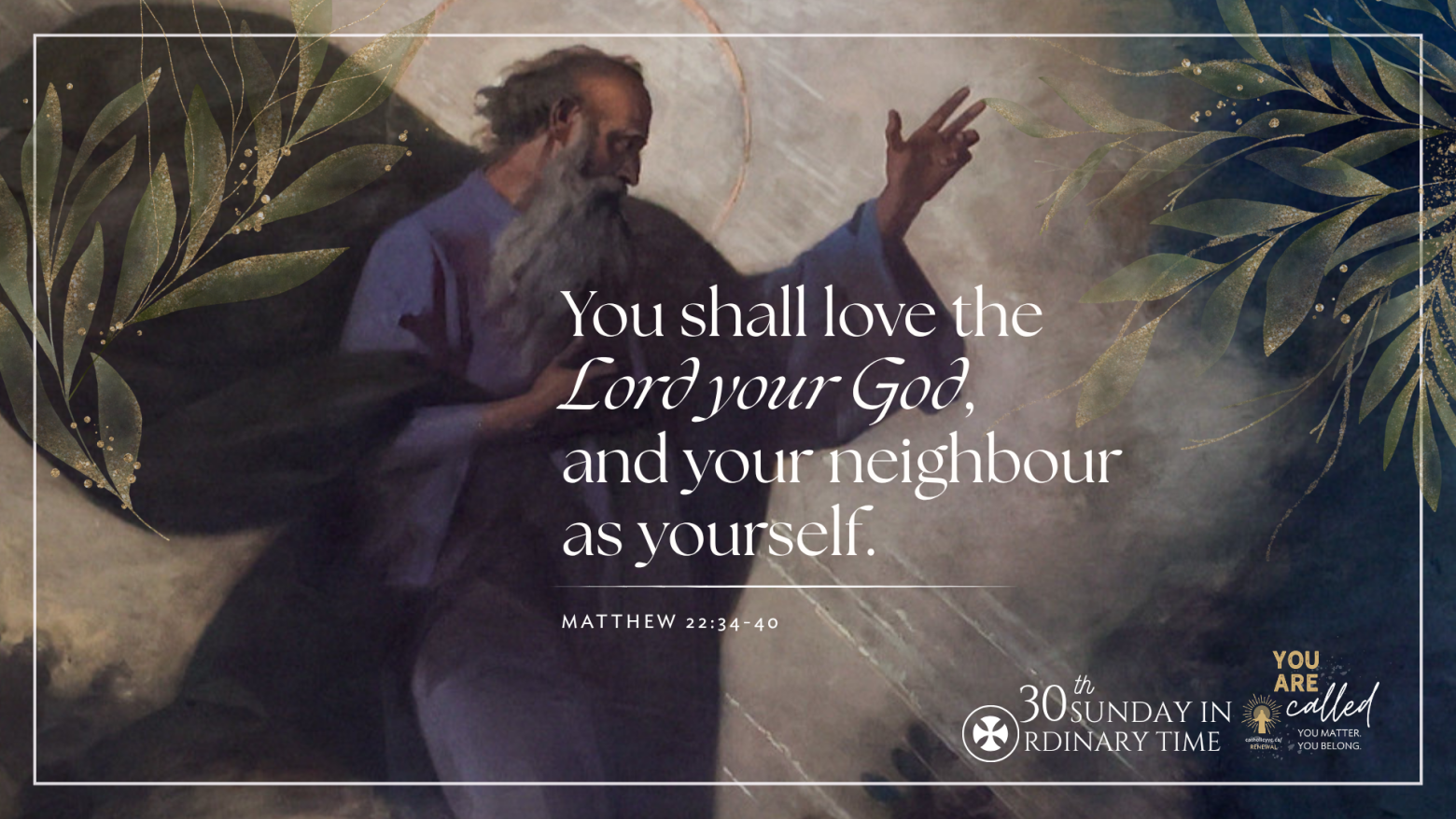
Gospel: Matthew 22.34-40
Responsorial Psalm: Ps 18.1-2, 3+6b, 46+50ab (R. 1)
R: I love you, O Lord, my strength.
Second Reading: 1 Thessalonians 1.5c-10
Gospel: Matthew 22.34-40
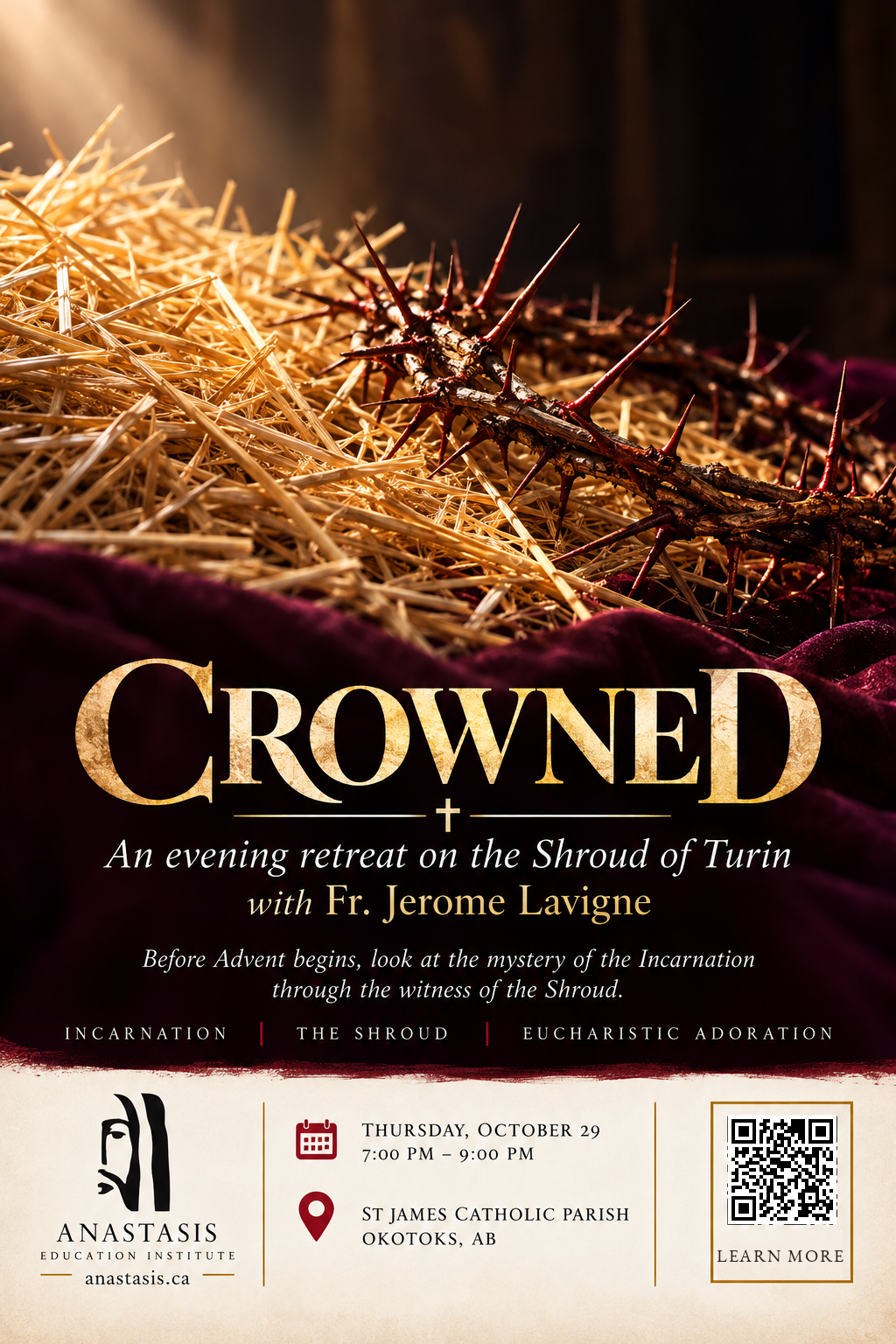
Crowned : An evening retreat on the Shroud of Turin with Fr. Jerome
Thu. Oct. 29th 7 pm
St. James Parish
Okotoks, AB
Join Fr. Jerome Lavigne for Crowned, an evening retreat exploring the mystery of the Incarnation through the witness of the Shroud of Turin on Thu, Oct 29, from 7–9 pm at St. James Catholic Parish in Okotoks. The retreat will conclude with Eucharistic Adoration and is open to all.
Please note: this is in Okotoks, AB, the event is NOT at St. Patrick's
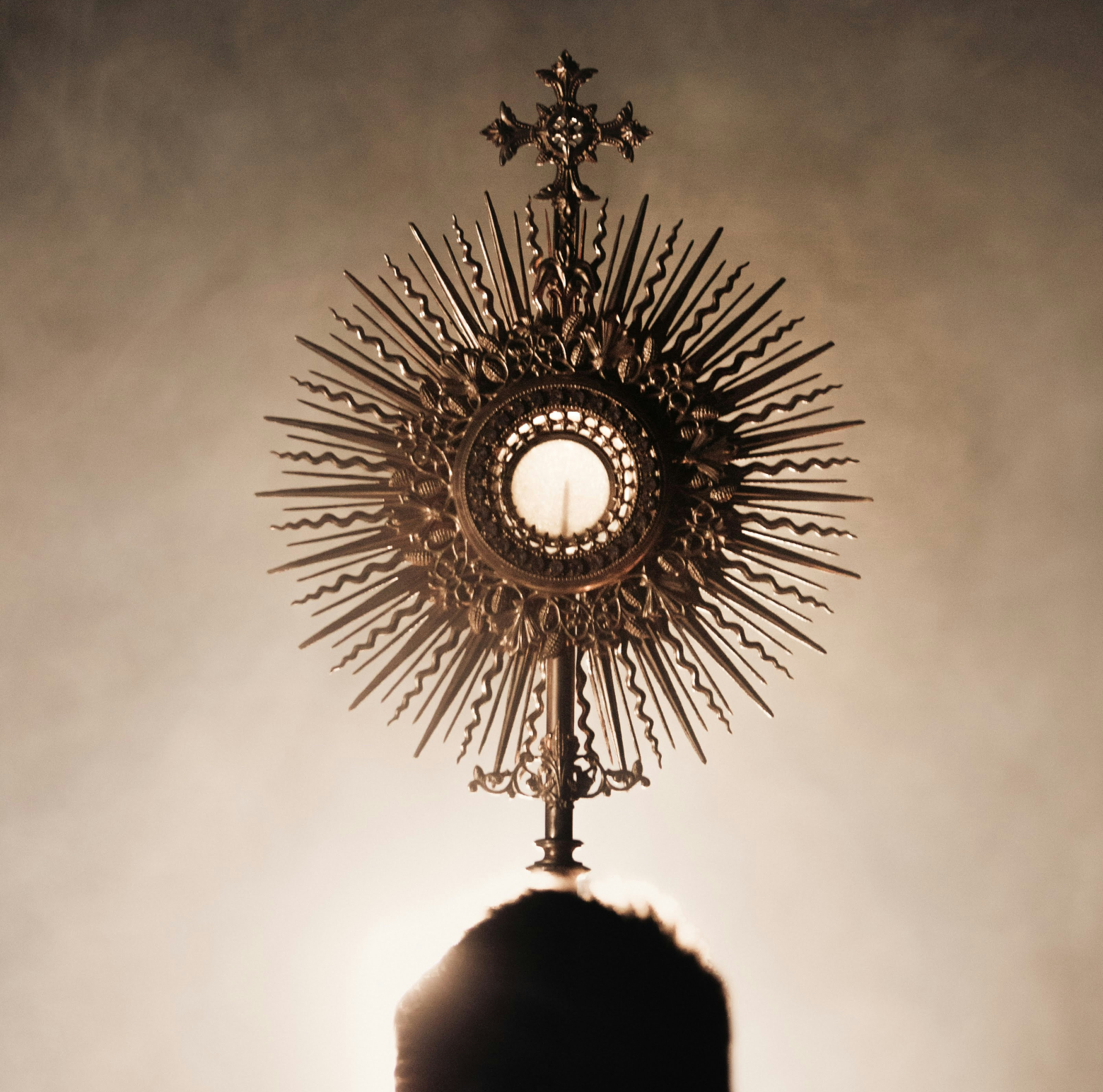
Heart of Jesus Holy Hour
TONIGHT - Fri. Oct. 23rd
7-8 pm
Step away from the noise and distractions of the week to find the peace that only Christ can provide. Join us for a dedicated hour of rest and renewal, featuring guided prayer, beautiful music, and quiet time for personal reflection in His presence.
All are warmly invited to attend.
Come exactly as you are, leave your worries at the door, and let Jesus renew your heart.
Ephphatha - Be Opened

Israel was chosen by God to be a light to the nations. To help them live differently from the surrounding pagan cultures, God gave them the Ten Commandments and hundreds of other commandments. These touched every part of life: worship, family, business, care for the vulnerable, and even what they ate. Through them, God was patiently shaping His people into a way of life marked by faithfulness to Him and care for one another.
Over the centuries, further customs and traditions grew up around these commandments. By the time of Jesus, there were many rules and interpretations to follow, which is why the religious scholar could ask Him which commandment was the greatest of all.
Jesus' answer would not have surprised His listeners. He quotes the Shema, a prayer every faithful Jew knew by heart and recited daily: "Hear, O Israel: The Lord is our God, the Lord alone." From this profession of faith flows the command to love God with one's whole heart, soul, mind, and strength. Jesus reminds His listeners that beneath all the commandments lies a relationship of love with the one true God.
What does this look like in practice? Loving God is more than an emotion. Feelings come and go, but true love remains an act of the will. We see this in Job, who lost everything yet continued to bless God. We see it most perfectly in Jesus, who in the Garden of Gethsemane surrendered Himself to the Father's will and prayed, "Not my will, but yours be done."
God looks at the heart. He wants our actions to flow from genuine love for Him rather than a desire to be noticed or praised. When we are rooted in that love, we think less about ourselves and become more willing to help, forgive, and serve others. Love for God naturally overflows into love for our neighbour, who also bears His image.
PONDER IN GOD’S PRESENCE:
In the ordinary moments of my day, how do I show my love for God?
Upcoming Parish Events

Knights of Columbus
Bottle Drive
Sat. Oct. 24th
9 am and 5 pm Masses
Save up your bottles and drop them off in the parking lot at St. Patrick's for the Knights of Columbus bottle drive. The proceeds from the bottle drive will be used to fund charitable activities and donations in our parish community. Your small act of kindness can make a big difference to someone in need.

Catholic Book Donation
Do you have any Catholic books that you would like to donate? Consider donating them to The Legion of Mary for the Book Barrow events. Book Barrow is where we give out Catholic books to parishioners for free.
Books can be dropped off at the Parish office, or call and leave a message at (403) 254-6878 OR (587) 433-7723.

Book Barrow
Oct. 24th and 25th
The Legion of Mary is giving out free Catholic books at the back of the church in all masses on October 24th and 25th, 2026.
Everyone is invited to come and pick up books to enrich your Catholic home.
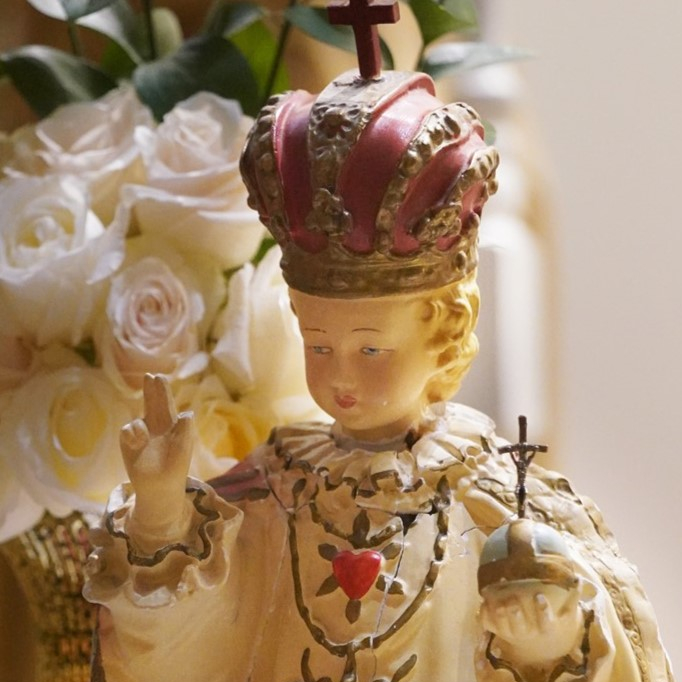
Infant Jesus Confraternity
Oct. 24th and 25th
The Infant Jesus Confraternity will be next to the Legion of Mary in all masses on October 24th and 25th, 2026. Come to the back of the church after mass to meet our members and learn more about the ministry and how to join.
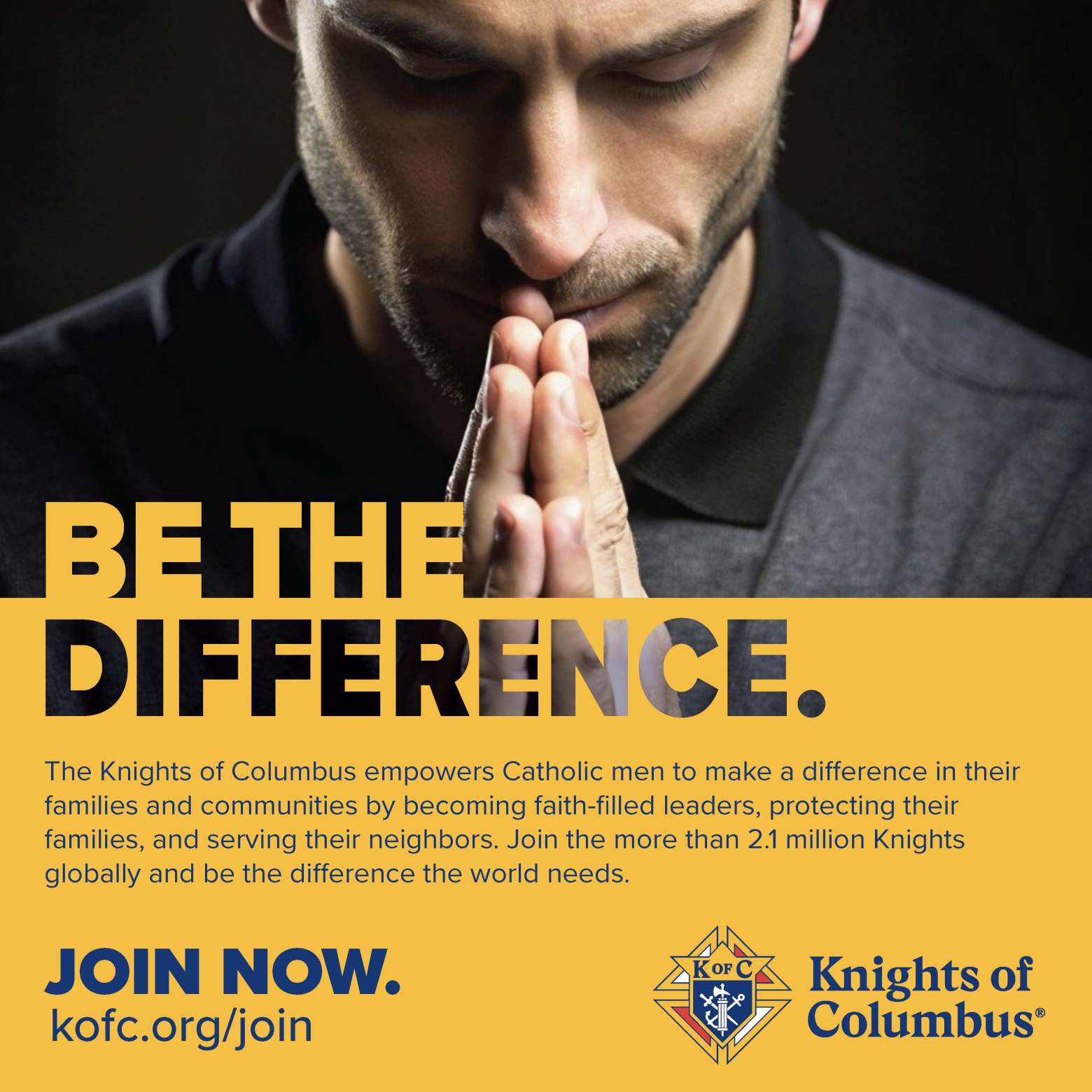
Knights of Columbus Membership Drive
Sat. Oct. 31, 5 pm Mass
Sun. Nov. 1, All Masses
The Knights of Columbus Council 8470 at St. Patrick's will be holding a membership drive on Oct. 31 and Nov. 1. All men 18+ are encouraged to sign up and make a difference in their families and communities by becoming faith-filled leaders. Join more than 2.1 million Knights globally and be the difference the world needs.
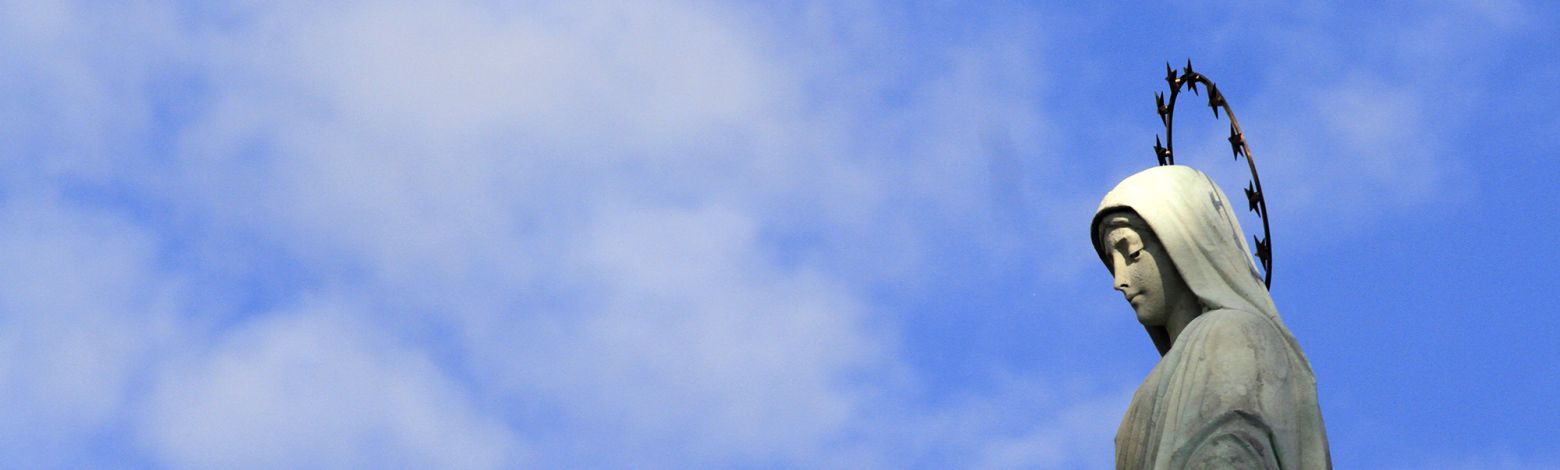
True Devotion to Mary - 33 Day Total Consecration starts Nov. 5
Register today - the program is free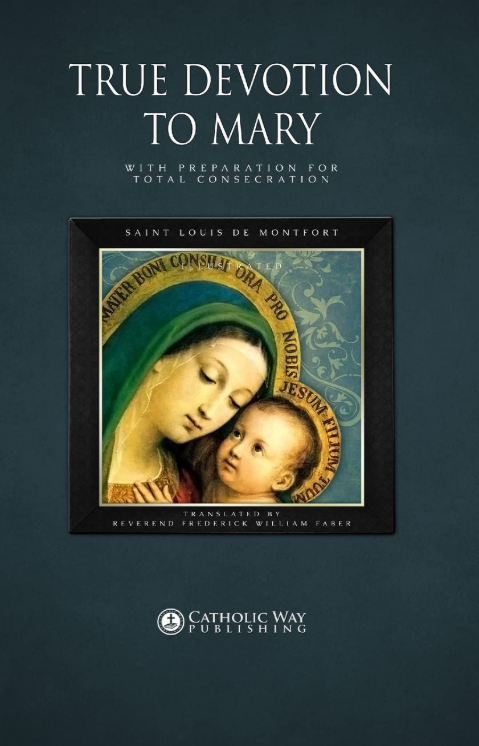
St. Patrick's will be participating in the True Devotion to Mary - Preparation for Total Consecration program starting on November 5th.
The program is free, register online and you will receive emails with updates and prayers to guide you through the entire devotion.
The program concludes with a Consecration Mass on December 8th at 7 pm. Those who complete the program and consecration Mass will receive a certificate.
Copies of the book True Devotion to Mary by Saint Louis de Montfort are available for purchase in the parish office for $10.
Volunteers Needed, 4 pm Mass
Your assistance is requested, come serve with your parish family
If you are available to help, please email info@stpatrickcalgary.com
We are looking for volunteers to serve at our 4:00 PM Mass. We need help in the following ministries:
- Ushers
- Extraordinary Eucharistic Ministers of Holy Communion (EEMHC)
- Liturgy Leaders (Sacristan)
Your time and willingness to serve help make our Mass a prayerful and welcoming experience for our parish community.
World Mission Sunday
Your prayers and generous support is requested this weekend
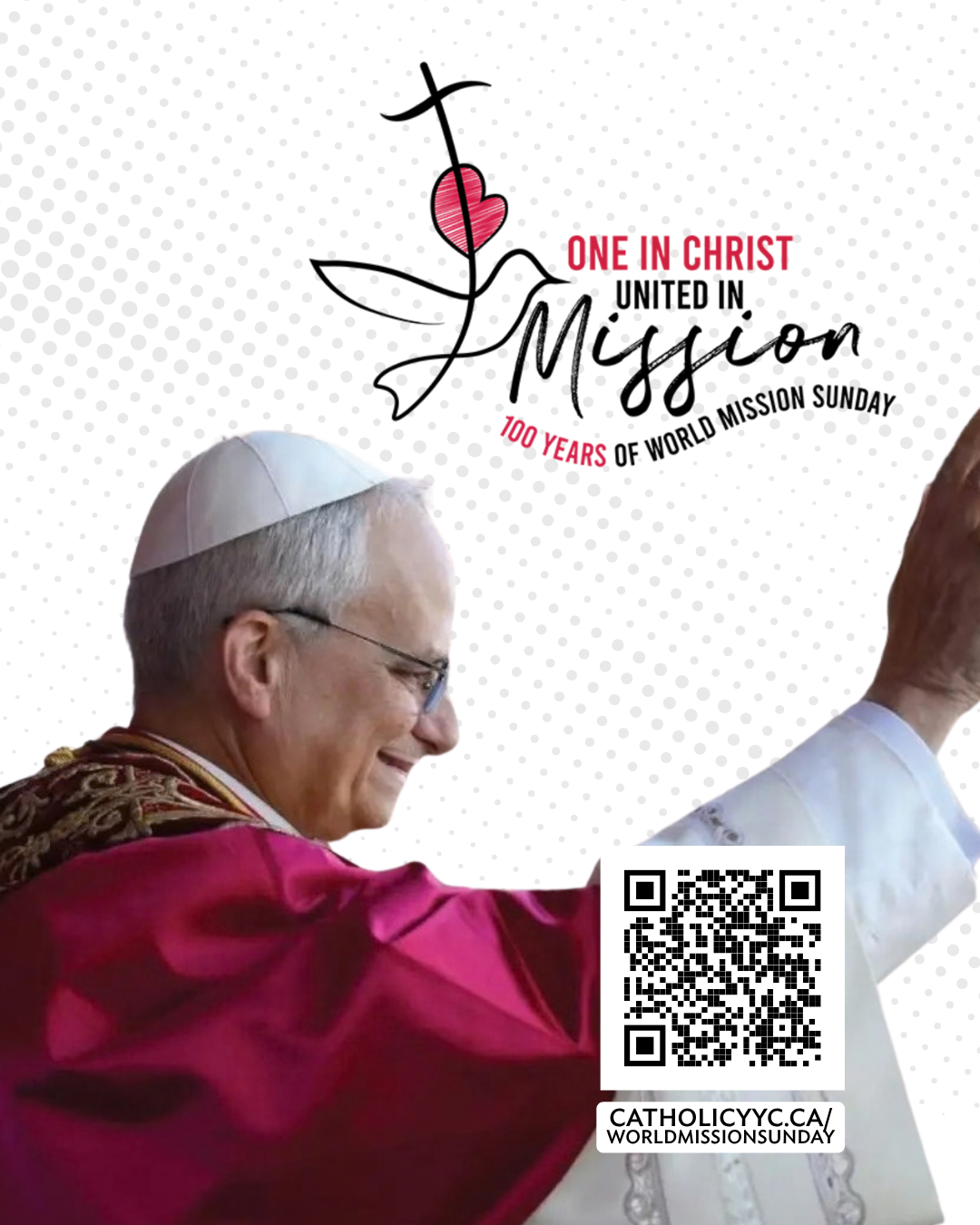
Oct. 24th & 25th there will be a second collection for World Mission Day. Your prayer and donations will assist churches, hospitals, schools, and the training of priests in mission dioceses & throughout the world. Donations may be made online via the link below.
Pray & Give Generously.
Weekly Parish Events
- Legion of Mary - Meets every Monday at 7pm
- Seniors Group - Meets every Wednesday from 1pm to 3pm
- Scripture Study - Meets every Thursdays at 9:45 (after morning Mass)
Children's Corner
Ablaze Youth Ministry
Youth in grades 6-12 are invited every Friday evening
October 30th Ablaze will be hosting a special event for youth and their families. Please RSVP for the upcoming All Hallows Eve Family Celebration - space is limited. We hope to see you there!
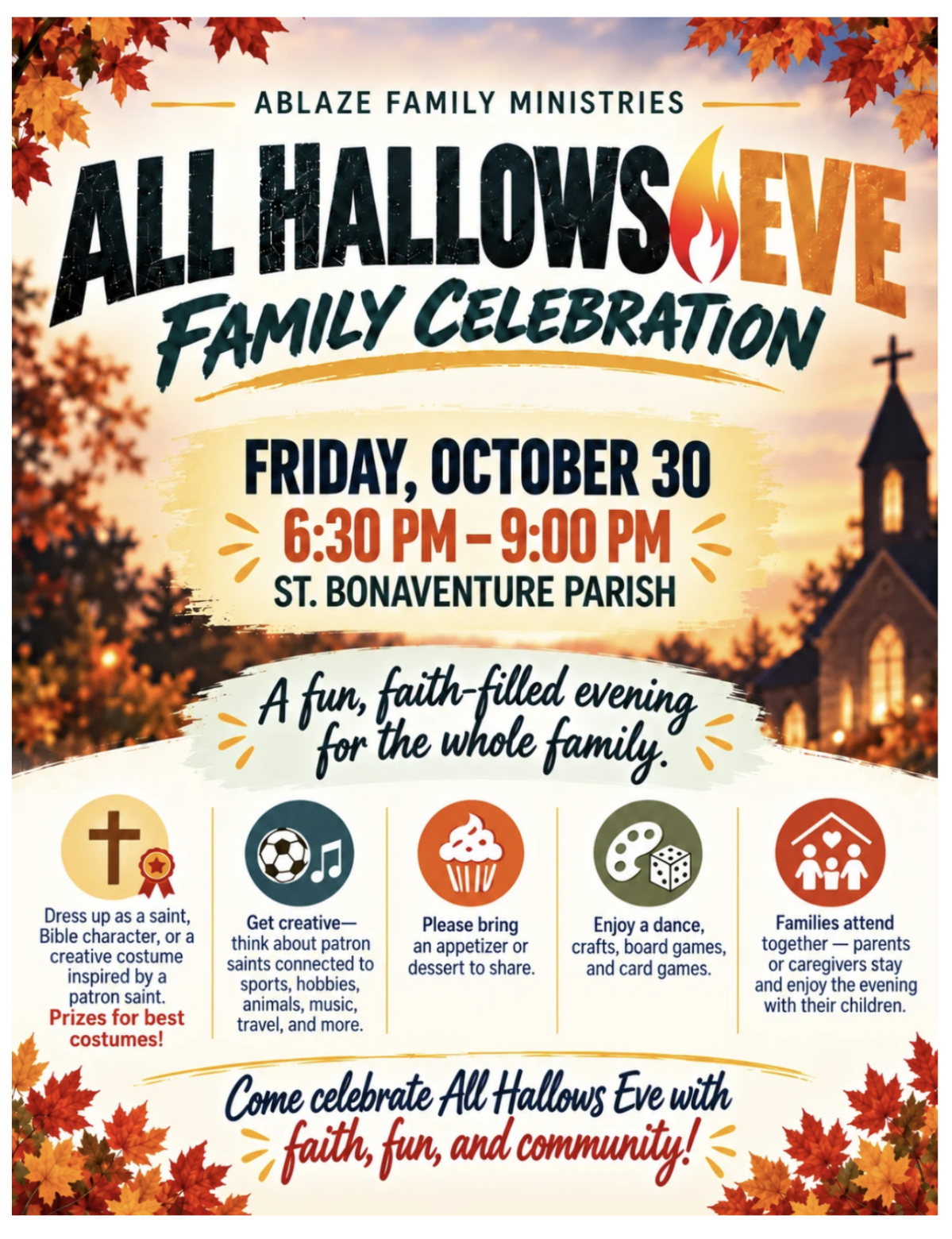
Ablaze Family Ministry for Grades 6 to 12 is offered Friday evenings from 6:30-9 pm at St. Bonaventure Parish.
For more information please contact Eileen Murdoch at (403) 278-7556 or youthfamily@stbonaventureparish.ca
For more information please contact Eileen Murdoch at (403) 278-7556 or youthfamily@stbonaventureparish.ca
St. Francis Xavier Chaplaincy
For young adults 18-35 in the Diocese of Calgary
Sat. Oct. 24 7 pm, SFXC Men's Ministry - Catholic Pastoral Centre
Sun. Oct. 25 4 pm, SFXC Mass, St. Mary's Cathedral
Wed. Oct. 28 5:30 pm, St. Joseph Chastity Group, Catholic Pastoral Centre
Wed. Oct. 28 7 pm, SFXC Mass, Adoration & Confession
Wed. Oct. 28 8:30 pm, Wing Night, St. James Corner Restaurant & Irish Pub
Thu.Oct. 29 5 pm, Food bank sorting, Calgary Food Bank
Thu. Oct. 29 7 pm, Horizons of Hope, Catholic Pastoral Centre
To learn more about St. Francis Xavier Chaplaincy or to see a list of upcoming events visit their website at sfxc.ca
Events in Our Community
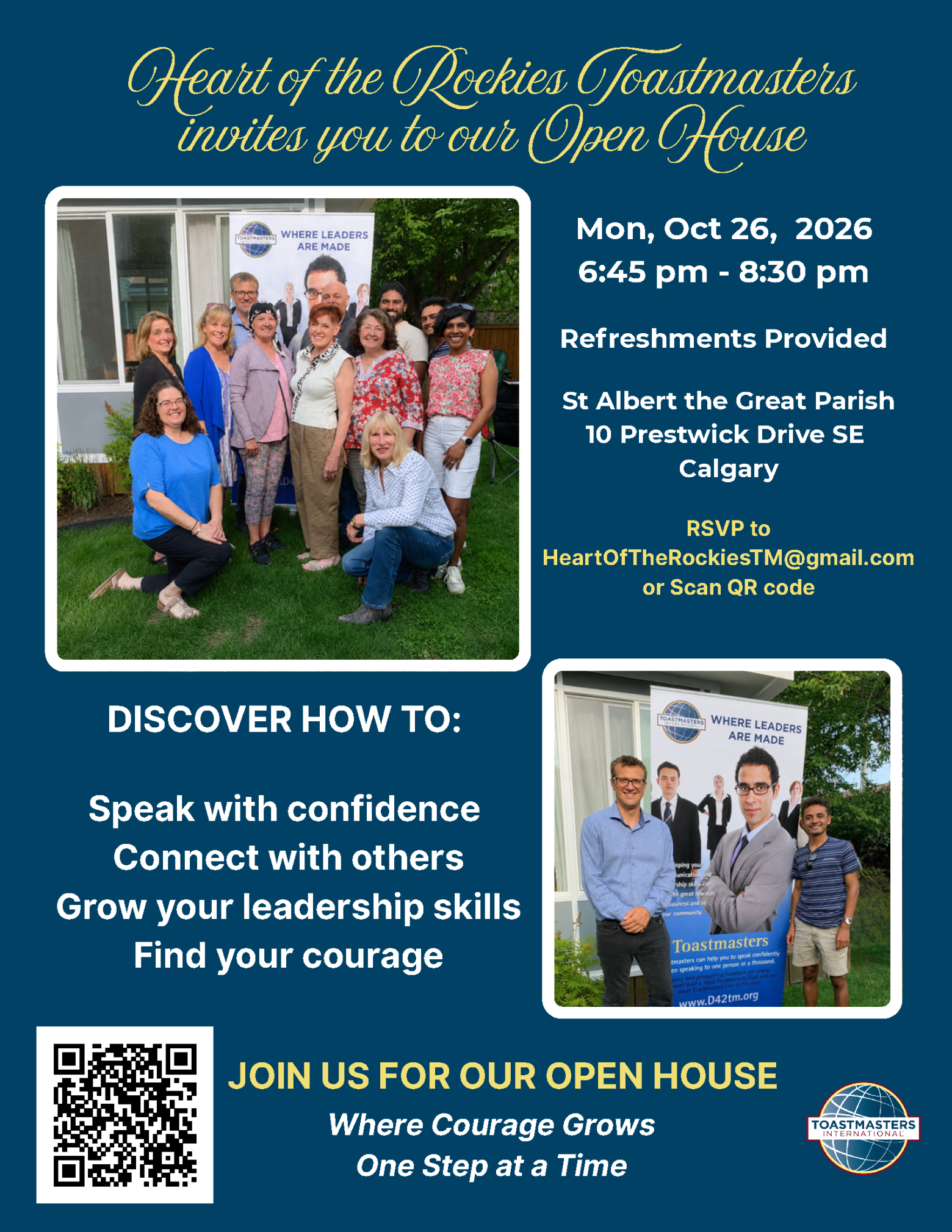
Heart of the Rockies Toastmasters Open House
Mon. Oct. 26th 6:45 pm
St. Albert the Great Parish
10 Prestwick Drive SE
Discover how to speak with confidence, connect with others, grow your leadership skills and find your courage. Please RSVP. Refreshments will be provided.
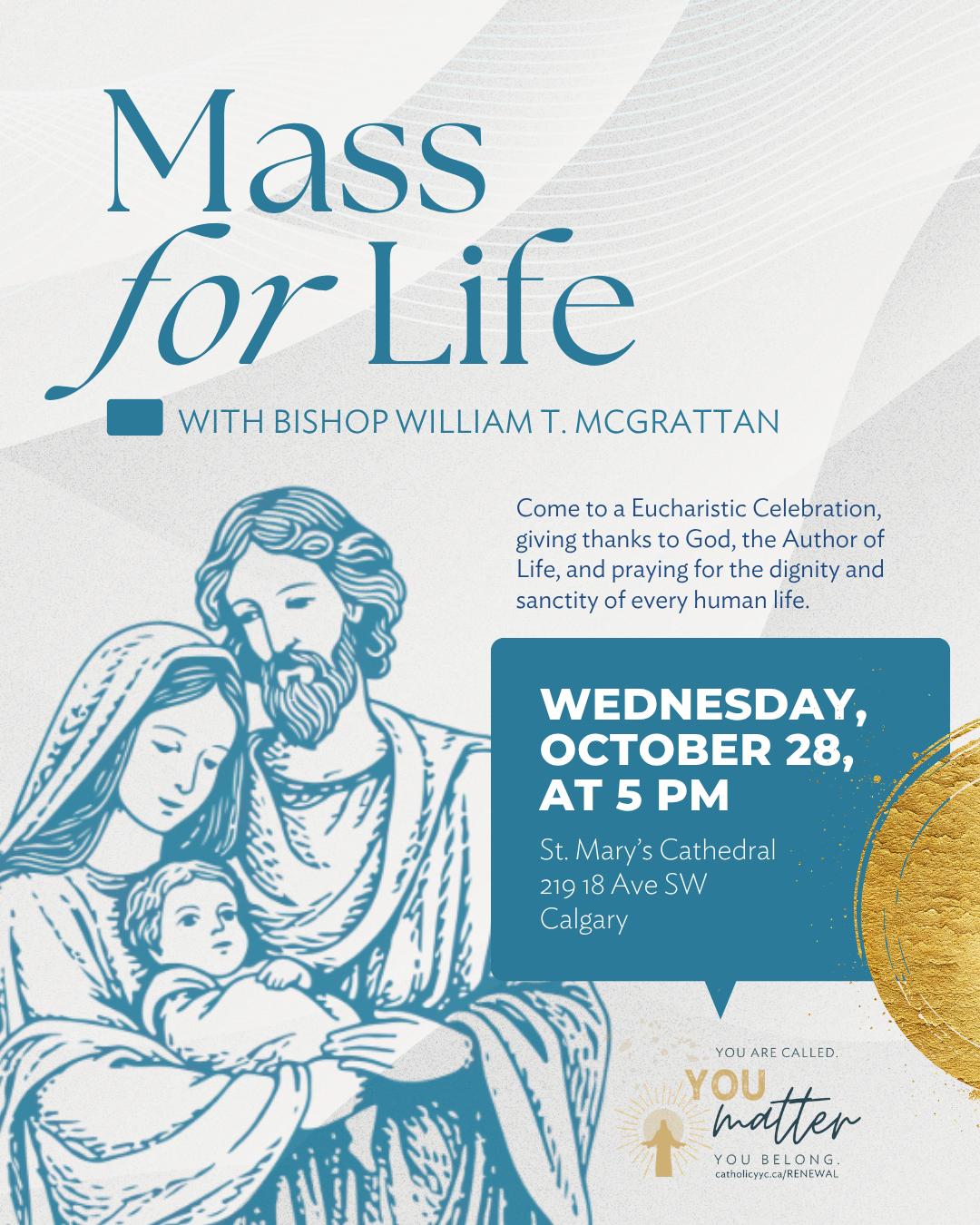
Mass for Life
Wed. Oct. 28th 5 pm
St. Mary's Cathedral
219 18 Ave. SW
Come to a Eucharistic Celebration, giving thanks to God, the author of Life, and praying for the dignity and sanctity of every human life.
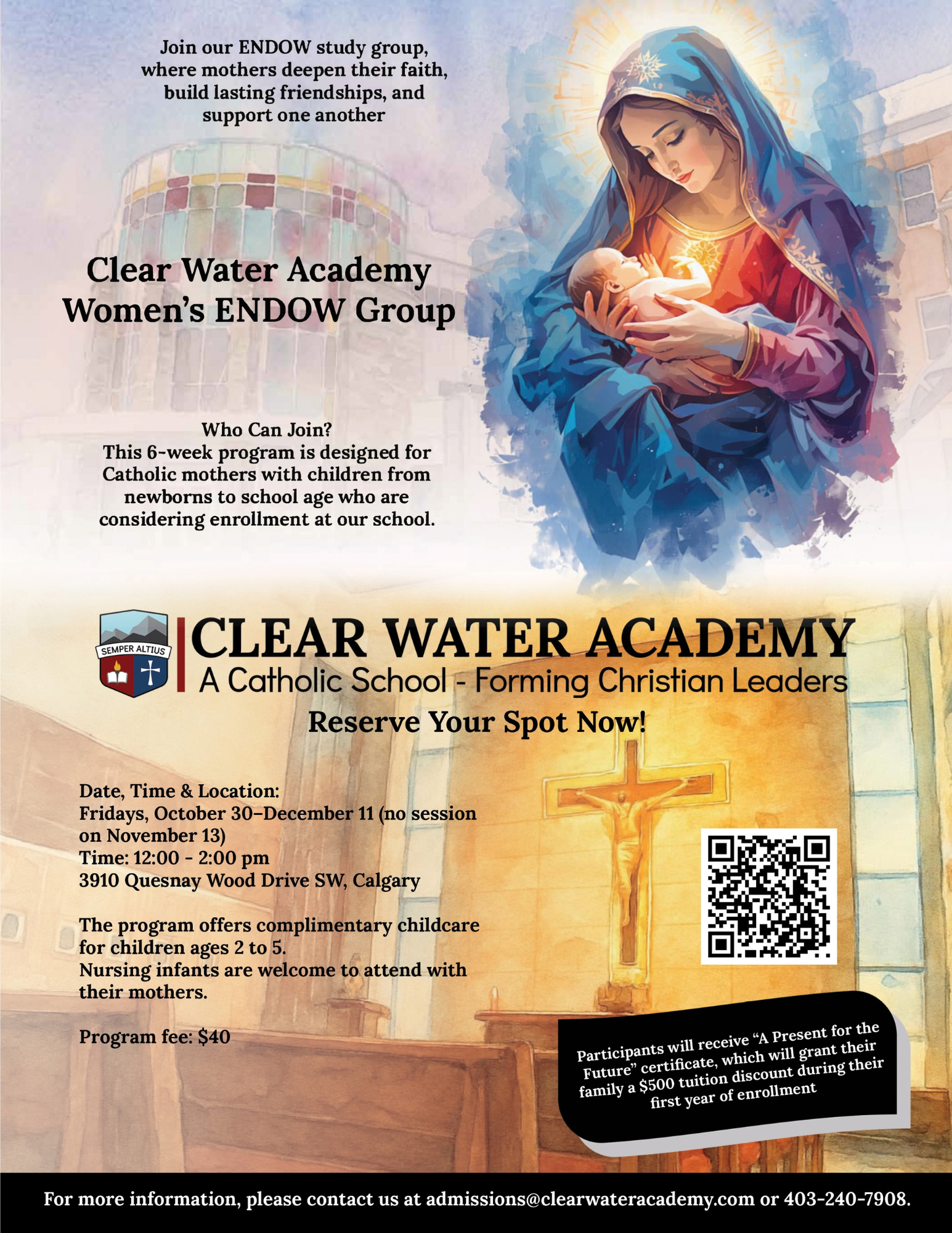
Clear Water Academy Endow Group
Fri. Oct. 30th Noon
3910 Quesnay Wood Drive SW
Program fee is $40
This six week program starts Oct. 30th and runs to Dec. 11. It is designed for Catholic mothers with children ages newborn to school age who are considering enrollment at our school.
The program offers complimentary childcare for children age 2 to 5. Nursing infants are welcome to attend with their mothers.
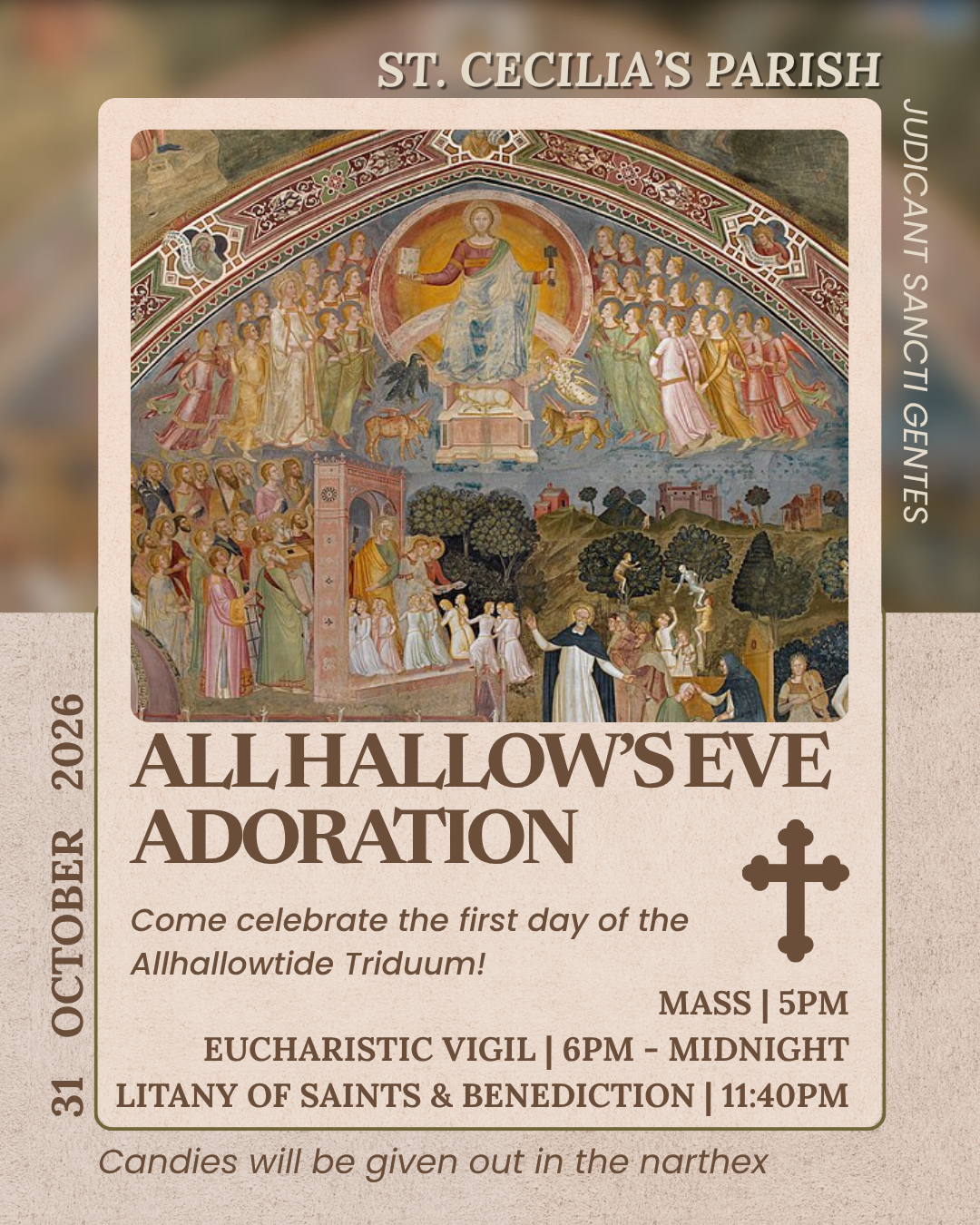
All Hallow's Eve Adoration
Sat. Oct. 31st 5pm
St. Cecilia's Parish
321 90 Ave SE
Celebrate All Hallow’s Eve with St. Cecilia’s Parish at its second annual Halloween Eucharistic Vigil.
Spend the evening in prayer and Adoration, preparing your heart for the Solemnity of All Saints.
Mass, 5 pm
Eucharistic Vigil, 6 pm to midnight
Litany of Saints & Benediction, 11:40 pm
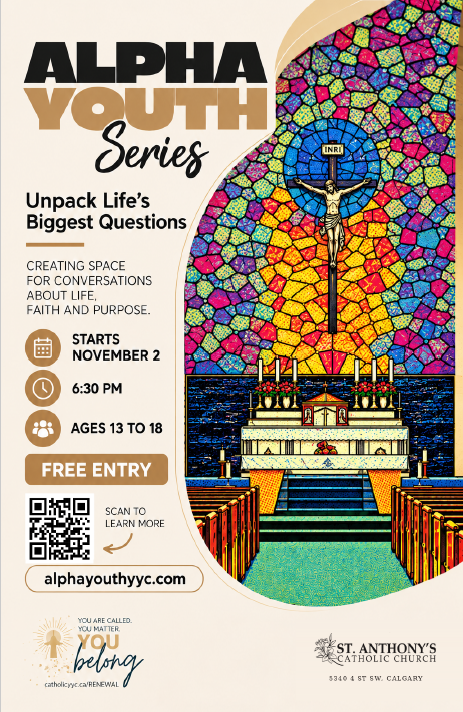
Alpha Youth
Starts Nov. 2 6:30 pm
St. Anthony's Catholic Church
5340 4 St. SW
Bring your questions, invite your friends, and enjoy great food, games, short films, and honest conversations, with live music on select nights. No pressure, no judgment, just a welcoming space to explore faith, ask questions, and be yourself.
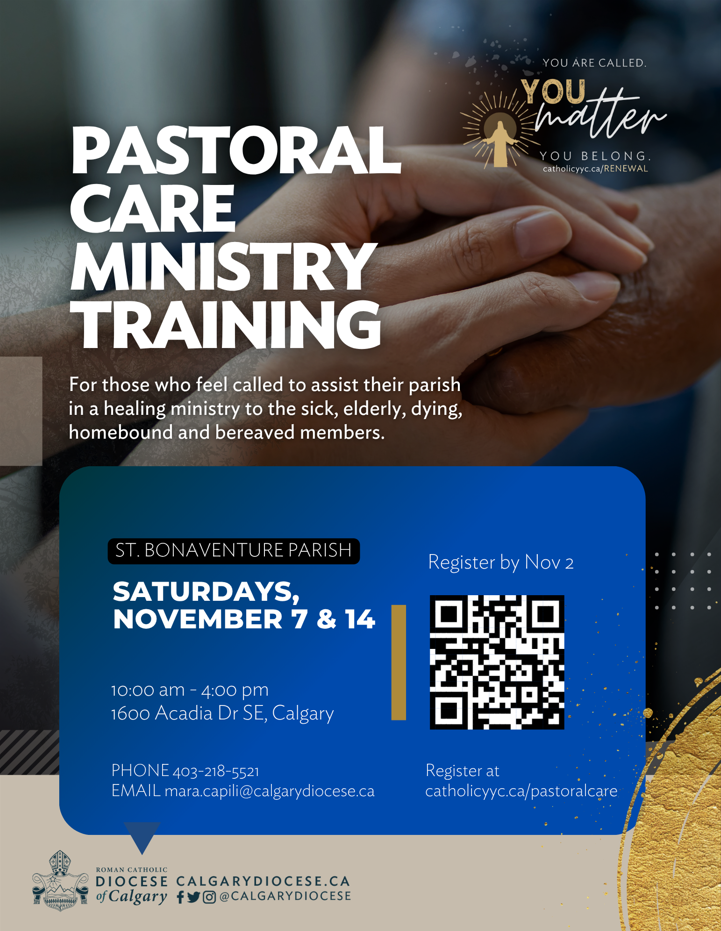
Pastoral Care Ministry Training
Sat. Nov. 7 and 14th
10 am to 4 pm
St. Bonaventure Parish
1600 Acadia Drive SE
Training is $50/person
The Diocese of Calgary invites those called to serve in healing ministries to join Pastoral Care Training. This program supports new and experienced ministers working with the sick, elderly, dying, homebound, and grieving.
Participants will develop visiting skills, learn to foster a ministry of presence, support individuals in various life stages (end of life, grief, sickness), and enhance empathy and compassion. The training helps create a deeper connection between individuals and their parish.
Participants will develop visiting skills, learn to foster a ministry of presence, support individuals in various life stages (end of life, grief, sickness), and enhance empathy and compassion. The training helps create a deeper connection between individuals and their parish.
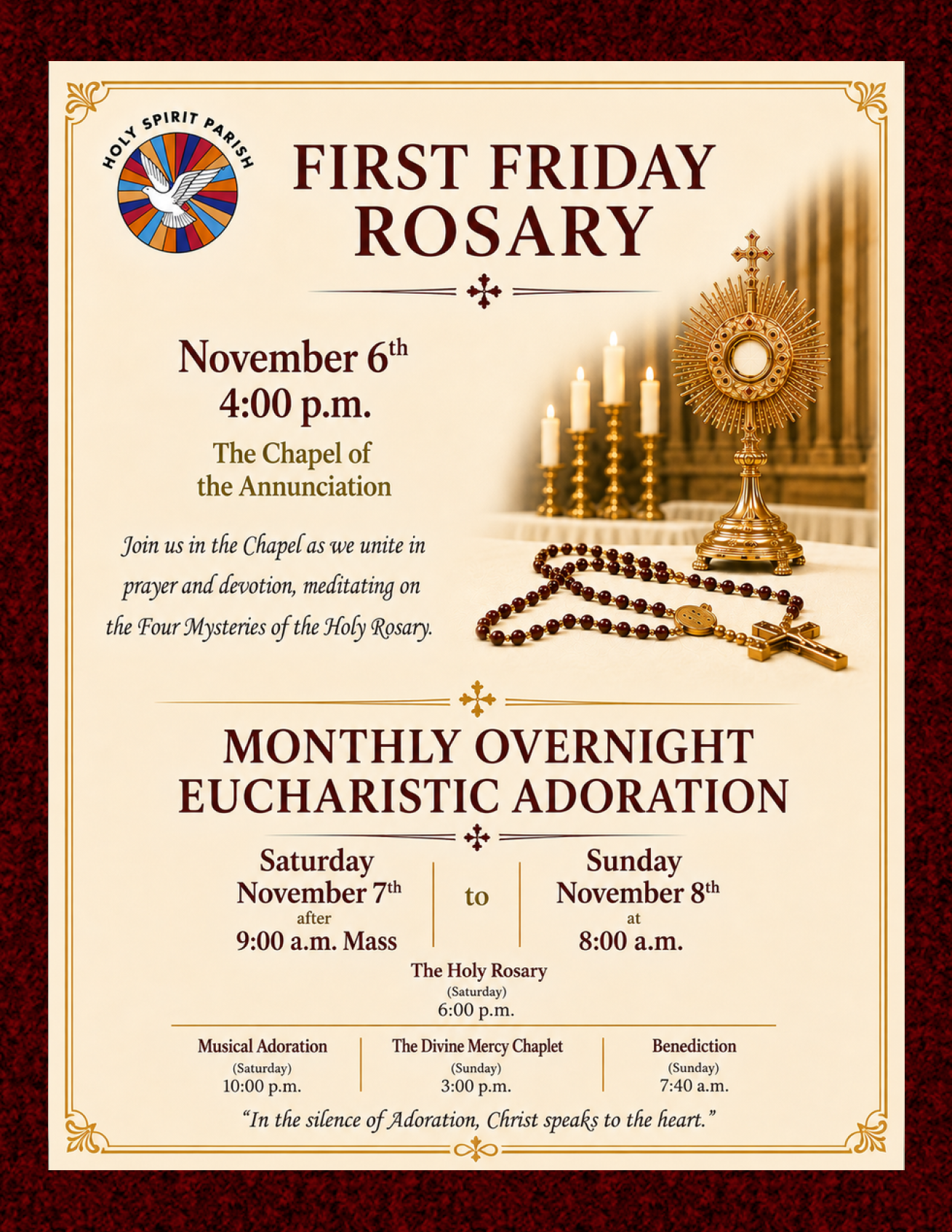
Overnight Adoration
Sat. Nov. 7 9 am to Sun. Nov. 8th at 8 am
Holy Spirit Church
10827 24 St SW
Holy Spirit Parish will be hosting First Friday Rosary on Nov. 6 at 4 pm.
Their monthly overnight Eucharistic Adoration will begin Sat. Nov. 7 after the 9 am Mass and continue until Sun. Nov. 8th at 8 am.
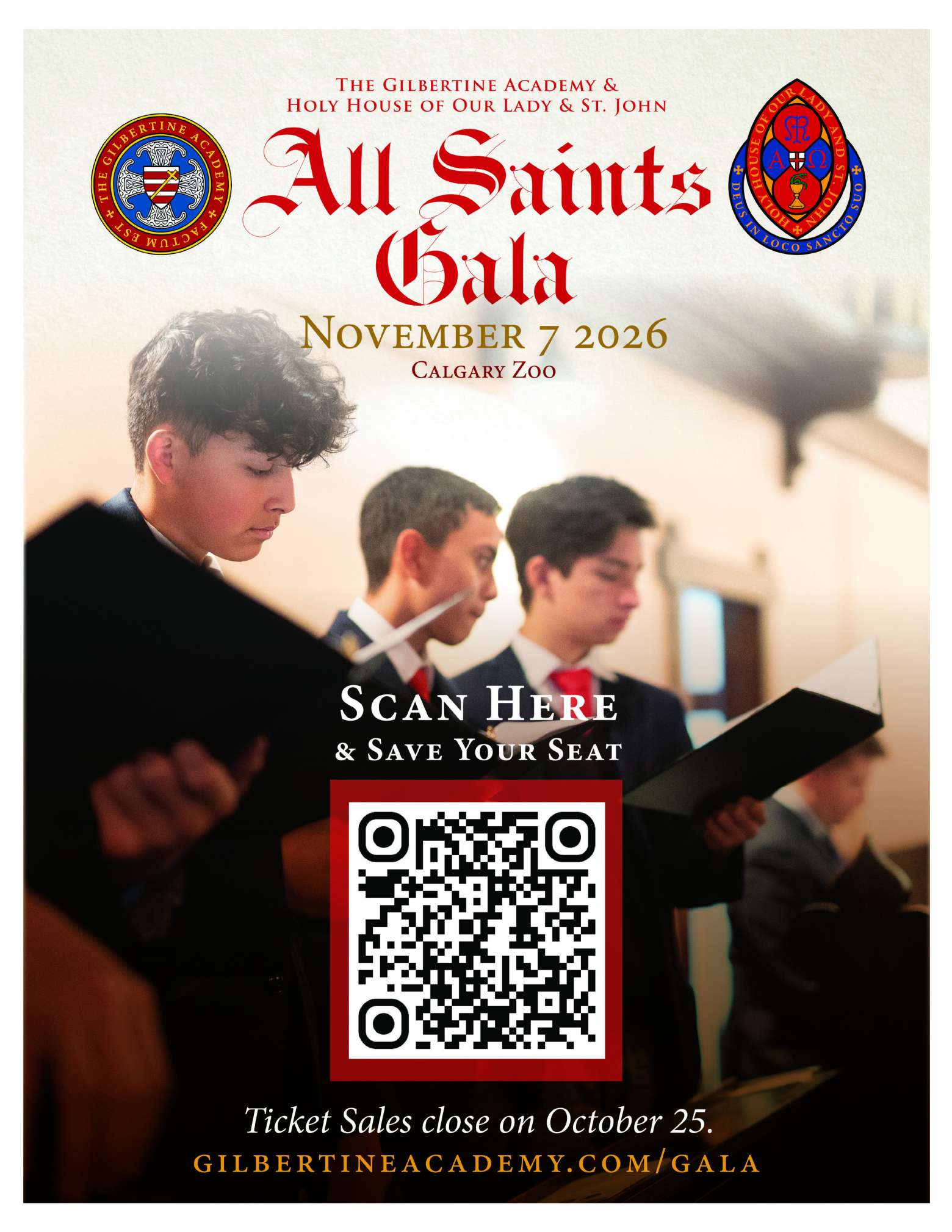
All Saints Gala 2026
Sat. Nov. 7 5:30 pm
Calgary Zoo
210 St. George's Drive NE
Celebrate the inaugural All Saints Gala hosted by Gilbertine Academy and Holy House of Our Lady & St. John.
Enjoy dinner, an inspiring keynote, and a choral performance by students while learning how you can help make excellent classical Catholic education accessible to more families.
Diocese of Calgary Updates
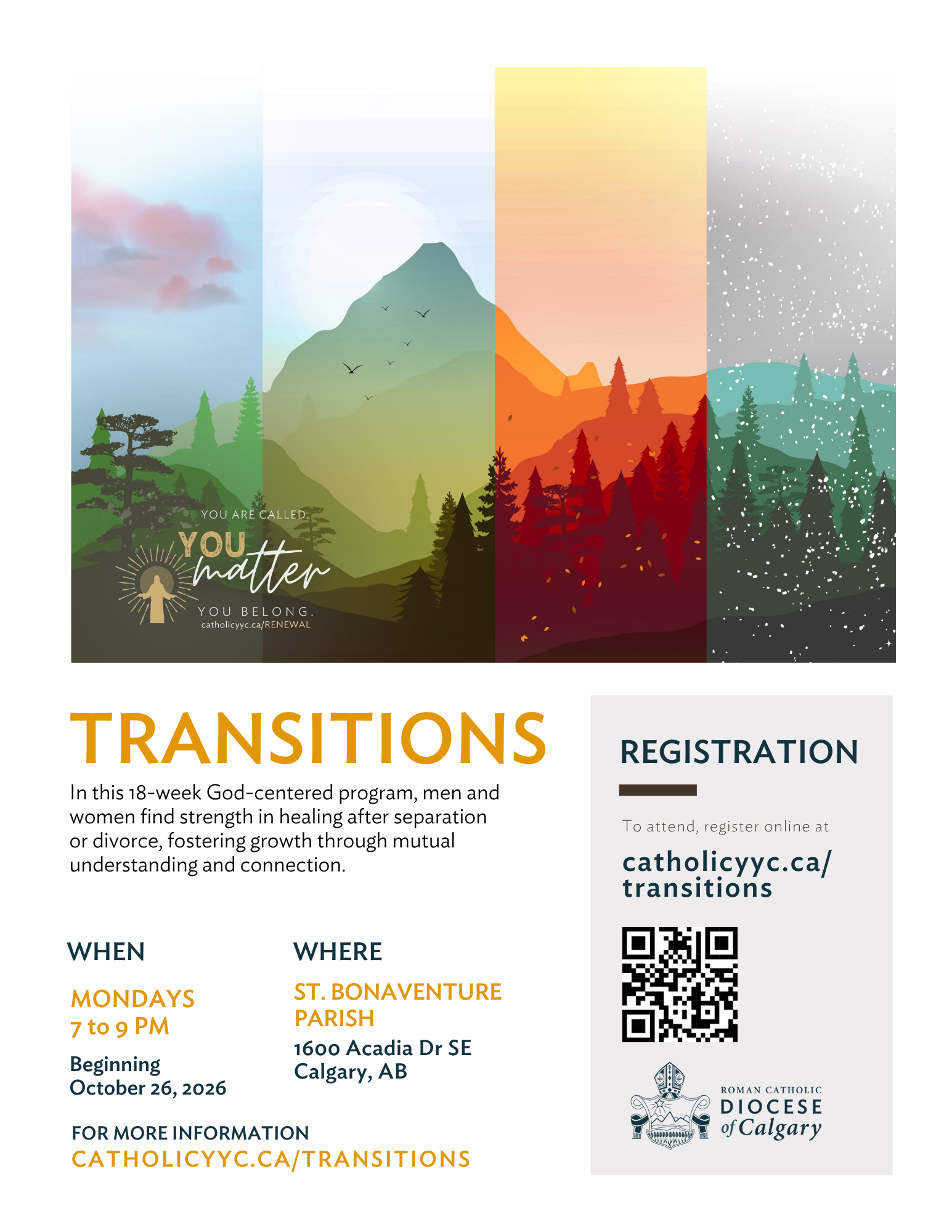
Transitions
An 18 week God-centered program for men and women to find strength in healing after separation or divorce.
Registration is now open
The Diocese is offering this program at no cost. It starts Monday Oct. 26th at St. Bonventure Parish. Meetings will be weekly on Mondays from 7 to pm.
Support St. Patrick's Online
Faith in Action : A Simpler Way to Give
Forget your envelope this week? No problem!
You can securely make a one-time or recurring donation to our parish online. It’s quick, easy, and directly supports our community.
You can securely make a one-time or recurring donation to our parish online. It’s quick, easy, and directly supports our community.

St. Patrick's Mass Times
Weekend Masses
Saturday 5 pm
Sunday 9 am, 11am, 1 pm, 4pm
Saturday 5 pm
Sunday 9 am, 11am, 1 pm, 4pm
Weekday Masses
Tuesday to Saturday 9 am
Tuesday to Saturday 9 am
Reconciliation
Friday Noon to 1 pm
Saturday 3:30 pm to 4:50 pm
Or by appointment
Rosary Devotions
Sunday 8:15 am
Tuesday to Saturday 8:20 am
Adoration
Fridays 9:30 am to Noon
Oct. 23rd 7-8 pm
Contact St. Patrick's
Office phone: (403) 254-6878
Sacraments: sacraments@stpatrickcalgary.com
Diocese website: www.catholicyyc.ca
All bulletin submissions must be received by Tuesday at Noon
Please send it to communications@stpatrickcalgary.com
St. Patrick's Roman Catholic Church
1414 Shawnessy Blvd. SW
Calgary, AB T2Y 2L7
Office Hours:
Monday: Closed
Tuesday-Thursday: 9:30 am to 3pm
Friday 9:30 am to Noon



